
13-Year Compulsory Education Included in National Education System Bill Draft, DPR Finalises Deliberation
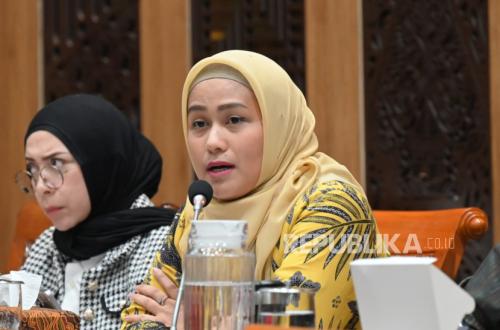
The policy of 13-year compulsory education has been included in the draft of the National Education System Bill (RUU Sisdiknas), which has been finalised by Commission X of the Indonesian House of Representatives (DPR). The draft will now enter the harmonisation stage at the DPR’s Legislation Body (Baleg) before being submitted as a DPR initiative proposal in a plenary session.
Chairperson of Commission X, Hetifah Sjaifudian, stated that the draft, consisting of 16 chapters and 257 articles, received approval from all eight factions in Commission X following deliberations that began in January 2025. "The approval of all factions in the internal meeting of Commission X is an important milestone before the discussion continues at the harmonisation stage in the DPR’s Legislation Body," Hetifah said on Thursday (9/7/2026).
Commission X member Karmila Sari said the Golkar Party faction supports the revision of the National Education System Law to address various national education challenges and prepare superior Indonesian human resources. "The Golkar Party faction views that the revision of the National Education System Bill must be able to present a quality, inclusive, flexible, and equitable education system, capable of answering global challenges and responsive to technological developments and social changes," Karmila said.
According to Karmila, one of the important substances proposed by the Golkar Party faction is the implementation of the 13-year compulsory education policy. Additionally, Golkar is pushing for equal distribution of education quality, equal treatment for public and private educational institutions, strengthening protection from violence in educational environments, adequate funding, support for general education, religious education and pesantren, as well as an education system that is adaptive to technological developments.
Karmila explained that the education sector still faces various problems, ranging from high disparities in human development between provinces, dropout rates, low average years of schooling in several regions, to low participation rates at secondary and tertiary education levels. She added that the gap in education quality is also influenced by limited facilities and infrastructure, uneven distribution of teachers, issues regarding the status and welfare of teachers and lecturers, and the need for a curriculum that is more relevant to future needs. "These problems are most felt by communities in underdeveloped, frontier, outermost, and marginalised areas. Therefore, the National Education System Bill must be able to provide a solution that brings equal opportunities to obtain quality education," Karmila said.
The draft of the National Education System Bill will next be discussed at the harmonisation stage in the DPR’s Legislation Body before being brought to a plenary session as a DPR initiative proposal.