
125-Million-Year-Old Dinosaur Fossil with Intact Skin Found to Resemble a Porcupine
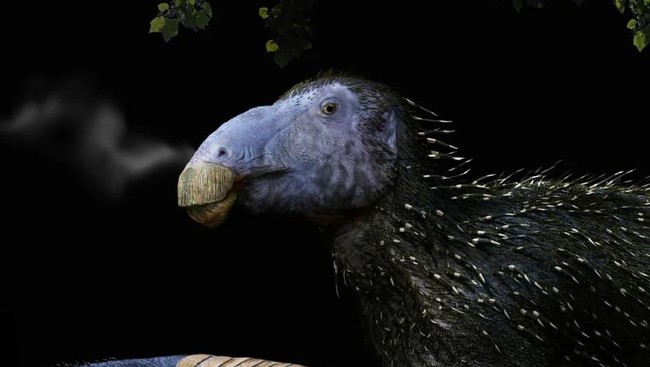
A rare fossil discovery in China has revealed a 125-million-year-old dinosaur with remarkably preserved skin and a body covered in hollow spikes, giving it an appearance similar to a modern porcupine. The species, a member of the Iguanodontia group, was found in the Yixian Formation of Lamagou, Liaoning Province, dating back to the Early Cretaceous period. Under normal conditions, the fossil would have appeared as a typical member of its group, as its bone and tooth structures were not particularly unique. However, the exceptional environment in which the animal died preserved its skin, allowing scientists to study the body surface in unprecedented detail.
Named Haolong dongi by a team led by Jiandong Huang of the Anhui Geological Museum, the genus name means ‘spiny dragon’ in Chinese, while the species name honours the late palaeontologist Dong Zhiming. The fossil measures approximately 2.45 metres from snout to tail, and its unfused vertebrae suggest it was a juvenile still in its growth phase. Researchers estimate that close relatives in the same region could reach lengths of 3 to 5.5 metres. The most striking feature is the skin, which displays two types of scales similar to modern reptiles, interspersed with nearly cylindrical hollow spikes. These structures differ from the proto-feathers of other non-avian dinosaurs and the spiny scales of modern lizards, suggesting they evolved independently.
Most of the spikes are tiny, around 2-3 millimetres, but they are mixed with longer ones, the largest preserved measuring 44.2 millimetres in length with a base width of 7.8 millimetres. Unlike the modified hairs of a porcupine, these spikes are formed from scale material that developed into protective structures. The research team, publishing their findings, suggests the primary function of these spikes was defence against predators, as most contemporary predators were small enough to be deterred by such a spiky exterior. The spikes would not have provided impenetrable protection against the teeth and claws of theropods, but they would have made the prey more difficult and time-consuming to kill and swallow, thereby reducing the likelihood of a successful attack. The larger spikes may have also served to intimidate rivals or attract mates, making Haolong dongi one of the most uniquely defended dinosaurs ever discovered from the Early Cretaceous period.
Source: jawawa.id (https://jawawa.id/newsitem/125-million-year-old-dinosaur-fossil-with-intact-skin-found-to-resemble-a-porcupine-1785804643)
Originally published by CNBC Indonesia (https://www.cnbcindonesia.com/tech/20260803111405-37-755994/ketemu-kulit-utuh-125-juta-tahun-dinosaurus-ini-ternyata-mirip-landak), translated from Indonesian