
120 Indonesian Nickel Vessels Unable to Sail, Here's Why
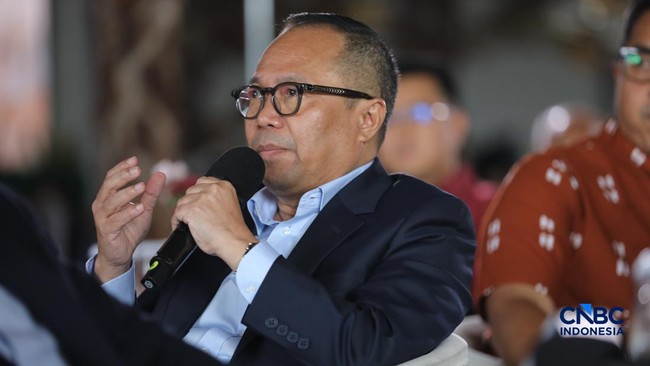
Jakarta, CNBC Indonesia – Chairman of the Indonesian Nickel Industry Forum (FINI), Arif Perdanakusumah, revealed that at least 120 commodity ships cannot sail or leave ports due to obligations to test for rare earth element (REE) content.
According to Arif, this is highly detrimental because there is no regulation providing guidelines on REE limits.
As is known, the Indonesian government has banned the export of 18 types of rare earth elements and their compounds with a purity level below 99%. This policy is regulated through Permendag No. 6 of 2026.
“This causes losses, not only for entrepreneurs but also for the government,” he explained at the CNBC Indonesia Coffee Morning event on Thursday (20/7/2026).
He understood that this provision is part of governance improvement efforts, and FINI appreciates what the government has done.
However, he hopes the technical aspects will be reviewed so that businesses are not harmed. “We appreciate it, but we need time,” he concluded.
Meanwhile, Chairman of the Indonesian Bauxite Association (ABI), Ronald Sulistyanto, proposed that the REE issue be returned to its original remit. According to him, REEs concern mining and extraction, so they should be resolved at the Ministry of Energy and Mineral Resources (ESDM).
“Because that is where the expertise lies. Now, if REEs are questioned, we must also ask where they come from. Whether from initial extraction — if it’s bauxite, the content is quite high. The main point is: is this a primary or a by-product? If it’s primary, then clearly there are other regulations. But if it is a by-product, then we are talking about details,” Ronald said.
Ronald hopes this problem will not drag on and can be resolved properly and elegantly, because it harms not only entrepreneurs but also the government.
“Have pity on friends who have worked hard, long aspiring for us to become a great nation, prospering in our own country, carrying out the state’s orders, which we have done — do not let it be tainted by unscrupulous practices,” Ronald concluded.
Executive Director of the Indonesian Mining Association (IMA), Sari Esayanti, revealed that the REE export ban poses a particular challenge for mining business operators, given that identifying REE content requires identification systems and testing for elements that naturally occur in various types of minerals.
“To date, mining businesses have been oriented towards primary commodities in accordance with their business licences and the plant designs owned by companies. In many commodities such as tin, bauxite, nickel and copper, the presence of REE elements is generally a by-product,” she said.
Sari said that at present most mining companies do not yet have sufficient facilities or technology to identify, separate or utilise REE elements economically.
As a result, this situation creates a new interpretation of reporting or export obligations, generating uncertainty for business operators.
“What businesses need is, in essence, a return to certainty regarding technical parameters, testing methodologies and reporting mechanisms, so that all business operators have the same standards,” Sari concluded.