
12 Figures Who Shaped Indonesia's Economy, from Hatta to Soemitro
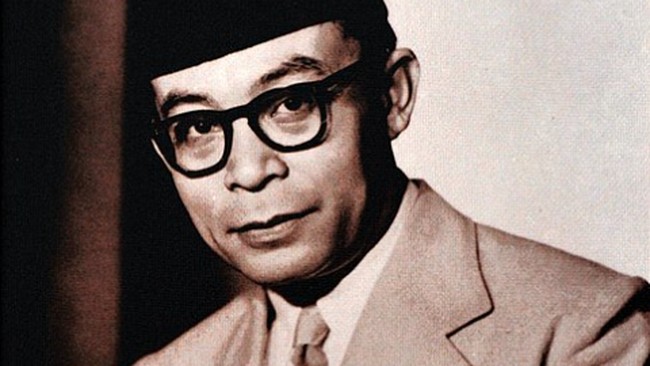
Jakarta, CNBC Indonesia - Indonesia’s economic journey has not been shaped by a single figure or a single idea, but by the thoughts and policies of various generations.
From Mohammad Hatta’s ideas of a people’s economy and cooperatives, Sjafruddin Prawiranegara’s monetary policies, Soemitro Djojohadikusumo’s Benteng Movement, to Mubyarto’s Pancasila Economy concept and the role of technocrats such as Radius Prawiro and Rachmat Saleh, all have been part of the long journey of building the foundations of the national economy.
The legacy of these figures shows that since the early days of independence, Indonesia has continued to seek an economic model capable of answering the challenges of the times while strengthening self-reliance and public welfare.
The following are a number of figures who have left an important mark on Indonesia’s economic development.
- Mohammad Hatta
Mohammad Hatta is not only known as the first Vice President and one of the Proclaimers of Independence. He was also one of the economic thinkers most closely associated with the ideas of a people’s economy and cooperatives.
His interest in economics developed from a young age. When he joined the Indonesian Association (Perhimpunan Indonesia) in the Netherlands, Hatta was entrusted with the role of treasurer in 1922 and later became chairman in 1925.
In 1926, he delivered a speech entitled Economische Wereldbouw en Machtstegenstellingen, or World Economic Structure and Power Conflicts. In that speech, Hatta discussed the structure of the world economy and power conflicts based on a non-cooperative policy stance.
Hatta later deepened his study of cooperatives, including by examining cooperative practices in Denmark. His ideas positioned cooperatives as a form of mutual cooperation economy, with the equal distribution of work and the sharing of results as one of its main principles.
This thinking led to Hatta becoming known as the Father of Indonesian Cooperatives.
- Sjafruddin Prawiranegara
If Hatta is widely known for his ideas on cooperatives and the people’s economy, Sjafruddin Prawiranegara left a strong mark in the field of finance and monetary policy.
He was one of the figures who pushed for the issuance of Oeang Republik Indonesia (ORI) as the country’s own currency. ORI was subsequently issued on 17 October 1945 and became an important part of efforts to demonstrate the Republic’s sovereignty while also organising an economy that was being hit by inflation.
His role in the monetary field continued in the early 1950s. Sjafruddin later became known for the Sjafruddin Scissors policy, a currency devaluation or cutting of the value of money to reduce the amount of money in circulation.
He also served as Minister of Finance and the first Governor of Bank Indonesia. Beyond monetary policy, Sjafruddin was known as an Islamic economic thinker.
In his writing Hakikat Ekonomi Islam (The Essence of Islamic Economics), he argued that Islamic economics is not merely about the prohibition of riba, but also concerns morality in economic activity.
- Soemitro Djojohadikusumo
Soemitro Djojohadikusumo was an economist who was heavily involved in the formulation of Indonesia’s economic policy in the early days of the Republic.
He obtained his doctorate from the Nederlandsche Economische Hogeschool in Rotterdam in 1943 with a dissertation entitled Het Volkscredietwezen in de Depressie, or People’s Credit in the Depression.
After returning to Indonesia in 1946, Soemitro became a staff member of Prime Minister Sutan Syahrir. He was later entrusted with the position of Minister of Trade and Industry in the Natsir Cabinet.
One of his best-known ideas was the Benteng Movement. This programme was aimed at strengthening indigenous entrepreneurs by granting privileges to indigenous importers as well as capital credit for entrepreneurs who had difficulty obtaining financing.
Within about three years of its implementation, around 700 companies received assistance. However, the programme also faced problems because some indigenous entrepreneurs were suspected of merely acting as intermediaries for non-indigenous entrepreneurs to obtain government credit.
The Benteng Movement was eventually discontinued after it failed to achieve its intended goals.
- Kaharuddin Yunus
Kaharuddin Yunus was one of the figures who brought Islamic economic thought into Indonesia’s economic debates in the early days of independence.
Born in Sulit Air, West Sumatra, Yunus obtained a BA in commerce from Al-Azhar University in Cairo in 1943. In 1945-1946, he was also involved in the Committee for Indonesian Independence in the Middle East branch.
His ideas were later set out in the work Sistem Ekonomi Menurut Islam (Bersamaisme), or The Economic System According to Islam (Togetherness-ism), which consisted of two volumes.
Yunus attempted to offer an economic approach rooted in Islamic thought at a time when Indonesia’s economic debates were still heavily influenced by capitalist and socialist ideas.
- Raden Bei Aria Wirjaatmadja
Long before the national banking system was formed as it is today, the issue of access to financing for ordinary people had already become a concern of Raden Bei Aria Wirjaatmadja.
While managing mosque funds in Purwokerto, he observed the problem of teachers who were forced to borrow money from loan sharks to meet their needs. From this arose the idea of using available funds as a means of lending to the community.
On 16 December 1895, Wirjaatmadja together with a number of figures established De Poerwokertosche Hulp en Spaarbank der Inlandsche Hoofden.
The institution later underwent various changes until it eventually became the forerunner of Bank Rakyat Indonesia (BRI).
His role shows that the issue of public financing had in fact been part of Indonesia’s economic development long before independence.
- Frans Seda
Indonesia’s economic problems entered another difficult phase in the mid-1960s. Inflation was even said to have reached around 650%.
Under these conditions, Frans Seda was entrusted with the position of Minister of Finance from 1966 to 1968.
He sought to reorganise state finances, including implementing a unified government budgeting system within the Ministry of Finance as well as a balanced revenue and expenditure budget model.
During his tenure, inflation that had previously reached 650% was
Source: jawawa.id (https://jawawa.id/newsitem/12-figures-who-shaped-indonesias-economy-from-hatta-to-soemitro-1786953107)
Originally published by CNBC Indonesia (https://www.cnbcindonesia.com/research/20260817115404-128-759988/12-tokoh-yang-membentuk-ekonomi-indonesia-hatta-hingga-soemitro), translated from Indonesian