
12 Facts on the US-Iran War Ceasefire, 10 Peace Points and the Fate of Hormuz
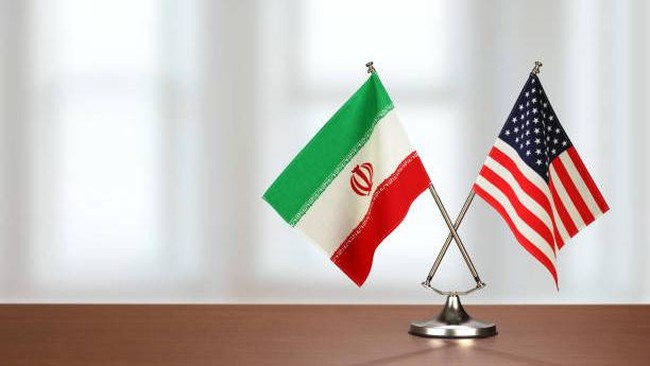
Jakarta, CNBC Indonesia - The war between the United States (US) and Iran has reached its latest development. The two countries have agreed to a ceasefire, as announced by President Donald Trump on Tuesday night Washington time.
He stated that he was suspending bombings of Iran for two weeks as part of the ceasefire agreement with Iran. He described it as a “two-sided” ceasefire.
So what are the facts? Here is a summary from CNBC Indonesia, Wednesday (8/4/2026).
- Trump’s Full Statement
Trump said on Tuesday that he agreed to suspend bombings of Iran for two weeks as part of the ceasefire deal if Tehran fully reopens the vital Strait of Hormuz. He even accepted the 10 points offered by Iran as a basis for discussion.
“Provided that the Islamic Republic of Iran agrees to the FULL, IMMEDIATE, and SAFE OPENING of the Strait of Hormuz, I agree to suspend bombings and attacks against Iran for a period of two weeks,” Trump wrote on his social media platform Truth Social.
“This will be a two-sided CEASEFIRE!” he added.
“The reason we are doing this is that we have met and exceeded all military objectives, and have reached a definitive agreement on long-term peace with Iran, and peace in the Middle East,” he said further.
“We accept Iran’s 10-point proposal and believe it is a workable basis for negotiation.”
- Official White House Statement
The White House also confirmed this by issuing an official statement from Trump via press release. Here is the full translated text of the White House statement as quoted from the official website.
“Based on conversations with Prime Minister Shehbaz Sharif and Field Marshal Asim Munir from Pakistan, where they asked me to hold back the destructive forces sent tonight to Iran, and subject to the agreement of the Islamic Republic of Iran to the full, immediate, and safe opening of the Strait of Hormuz, I agree to suspend bombings and attacks against Iran for a period of two weeks.”
“This will be a two-sided ceasefire! The reason for doing so is that we have met and exceeded all military objectives, and are very far towards a definitive agreement on long-term peace with Iran, and peace in the Middle East.”
“We accept Iran’s 10-point proposal and believe it is a basis that can be worked on for negotiation. Almost all of the various past contentious points have been agreed between the United States and Iran, but the two-week period will allow those agreements to be finalised and refined.”
“On behalf of the United States, as President, and also representing countries in the Middle East, it is an honour to bring this long-standing issue close to resolution. Thank you for your attention to this matter! President Donald J. Trump.”
- Pakistan as “Peacemaker”
Pakistan is reported to be the peacemaker in this ceasefire. Pakistan’s Prime Minister (PM) Shehbaz Sharif said that the US, Iran, and their allies have agreed to a ceasefire to halt the weeks-long fighting.
“I am pleased to announce that the Islamic Republic of Iran and the United States, along with their allies, have agreed to an immediate ceasefire everywhere including Lebanon and elsewhere, EFFECTIVE IMMEDIATELY,” Sharif wrote on X on Wednesday.
“We very much hope that the ‘Islamabad Negotiations’ will succeed in achieving sustainable peace and look forward to sharing more good news in the coming days,” he said.
- Iran’s Response
Iraq’s Foreign Ministry stated on Wednesday that they “welcome” the two-week ceasefire between the US and Iran. Tehran also called for “serious and sustainable dialogue” between the two countries.
“Calling for building on this positive step by launching a track of serious and sustainable dialogue that addresses the root causes of disputes and strengthens mutual trust,” their post on X stated.
- Negotiations in Islamabad Starting 10 April
Iran’s Supreme National Security Council explained that negotiations will begin in Islamabad, Pakistan. The talks will officially take place on Friday, 10 April 2026.
The country will also allocate two weeks for these negotiations. The time can be extended with the agreement of the involved parties.
“The ongoing negotiations are national negotiations and a continuation of field negotiations, and it is very important for the entire people, elites, and political groups to trust and support this process, which is under the supervision of revolutionary leaders and the highest level of the system, and to firmly avoid divisive statements,” the institution emphasised as reported by Al-Jazeera.
“If the enemy’s surrender on the field becomes a determining political achievement in the negotiations, we will celebrate this great historic victory together; if not, we will fight side by side on the field until all the demands of the Iranian nation are met,” it added.
“Our hands are on the trigger, and if the enemy makes the slightest mistake, we will retaliate with full force.”
- Iran’s 10 Points
The negotiations are being conducted based on Iran’s 10-point plan. Quoting Al-Jazeera, some of those points include:
-Control of traffic through the Strait of Hormuz in coordination with Iran’s armed forces, which will give Iran a unique economic and geopolitical position
-The need to end the war against all elements of the axis of resistance
-Withdrawal of US combat troops from all bases and deployment points in the region
-Establishment of a safe transit protocol in the Strait of Hormuz in a way that guarantees Iran’s dominance in accordance with the agreed protocol
-Full payment of Iran’s damages according to estimates
-Lifting of all sanctions