
12 Car Recommendations Under Rp200 Million
The Indonesian automotive market in 2026 continues to demonstrate high enthusiasm in the affordable vehicle segment. For consumers with limited budgets, new car choices below Rp200 million are now dominated by the Low Cost Green Car (LCGC) category and several entry-level City Car types that offer high fuel efficiency and functionality.
As a guide for those planning to purchase a new vehicle, our editorial team has summarised 12 car recommendations with prices below Rp200 million (OTR Jakarta). Please note that prices may change at any time according to dealer policies and respective regions.
The Toyota Agya remains a favourite in the compact hatchback segment. Featuring a 1,200 cc 3-cylinder Dual VVT-i engine, this car offers a balance between performance and fuel economy. Safety features such as ABS+EBD and Vehicle Stability Control (VSC) are available on certain variants.
Its sibling, the Toyota Ayla, offers a wider range of variants, including a 1,000 cc engine for a more competitive price. Its latest design is more modern, utilising the DNGA platform which provides more stable handling.
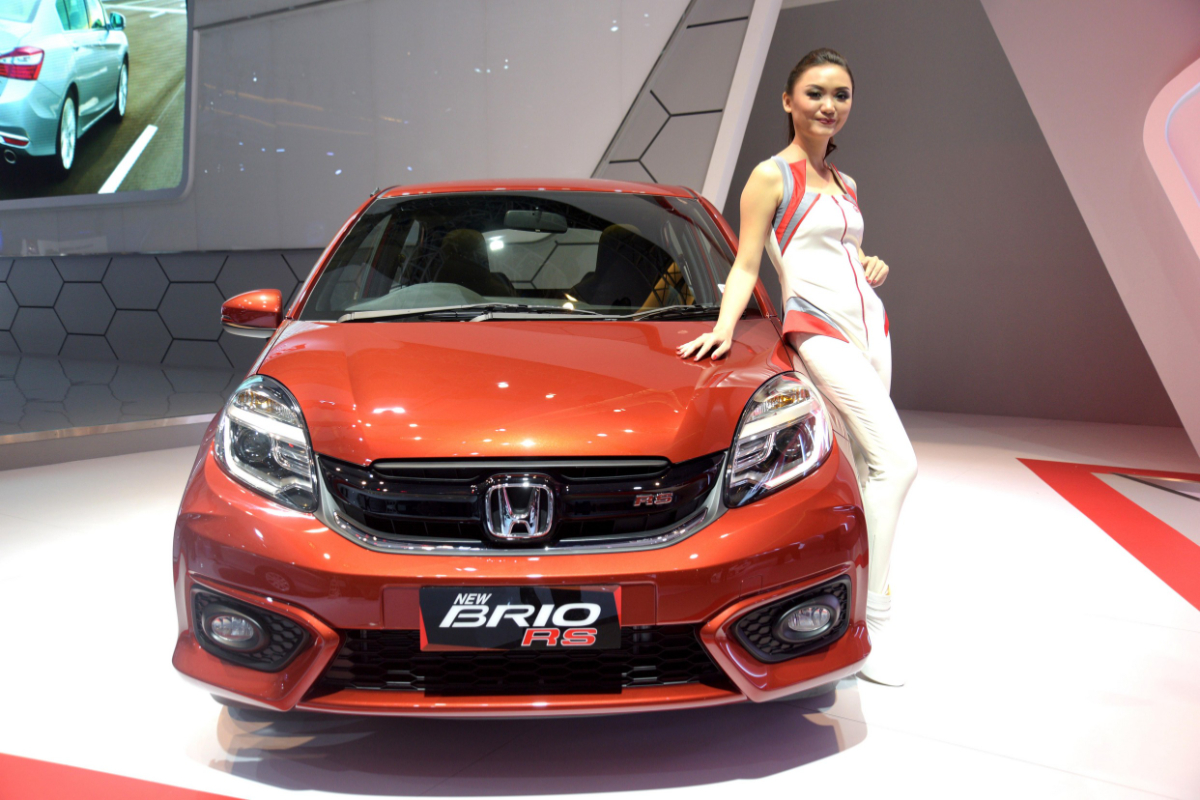
The Honda Brio Satya is known for having the best ‘fun to drive’ quality in its class. The 1.2L i-VTEC 4-cylinder engine produces 90 PS, the highest in the LCGC segment. The interior is quite ergonomic, although boot space is limited.
For young families, the Toyota Calya is an affordable 7-passenger MPV solution. The 1.2L engine used is sufficiently robust for daily urban use.
The Daihatsu Sigra is one of the best-selling cars in Indonesia due to its very friendly pricing. Options include 1.0L and 1.2L engines with a three-row seating configuration.
The Suzuki S-Presso, a city car with an SUV aura, is very agile for navigating traffic congestion. Using a highly efficient 1.0L K10C engine, the S-Presso is now equipped with an Electronic Stability Programme (ESP).
Wuling offers the Formo S as a passenger vehicle based on a commercial model. Its advantage lies in its very spacious cabin and highly competitive pricing for a capacity of 5 to 8 passengers.
For those looking for an electric vehicle (EV) under Rp200 million, the Lite variant of the Wuling Air ev is currently the only new option available, thanks to government incentives.
Although it is a commercial vehicle, the Suzuki Carry remains a recommendation for those seeking a new unit under Rp200 million for business operational purposes, featuring the legendary 1.5L engine.
Similar to the Carry, the Suzuki Gran Max is a tough choice for the logistics sector. The 1.3L and 1.5L engines offered provide high durability and easy maintenance.
This tiny electric car is a serious challenger in the cheap EV segment. With a futuristic design, the Seres E1 is suitable for short-distance urban mobility.
The final option is a pickup truck from DFSK, which offers a large cargo capacity and a powerful engine to support business productivity.
The price data above are estimates for OTR Jakarta as of June 2026. For specific information regarding unit availability and the latest promotions, it is recommended to contact the official dealers of each respective brand directly.
Choosing a car under Rp200 million requires careful consideration of safety features and long-term maintenance costs. If passenger comfort is your priority, the Toyota Calya or Daihatsu Sigra are appropriate choices. However, if efficiency and ease of parking are priorities, the Honda Brio or Suzuki S-Presso are worth considering.
For consumers wishing to switch to environmentally friendly vehicles, the presence of electric cars under Rp200 million, such as the Wuling Air ev Lite and Seres E1, brings new colour to the national automotive market. Although their dimensions are small, the efficiency in operational costs is a major, hard-to-resist attraction for daily commuting.
Before deciding, ensure you perform a test drive to personally experience the engine performance and cabin comfort. Also, pay attention to the availability of official workshop networks in your city to guarantee ease of periodic servicing and the availability of spare parts in the future.