
12 Academics Support Strengthening Land Governance
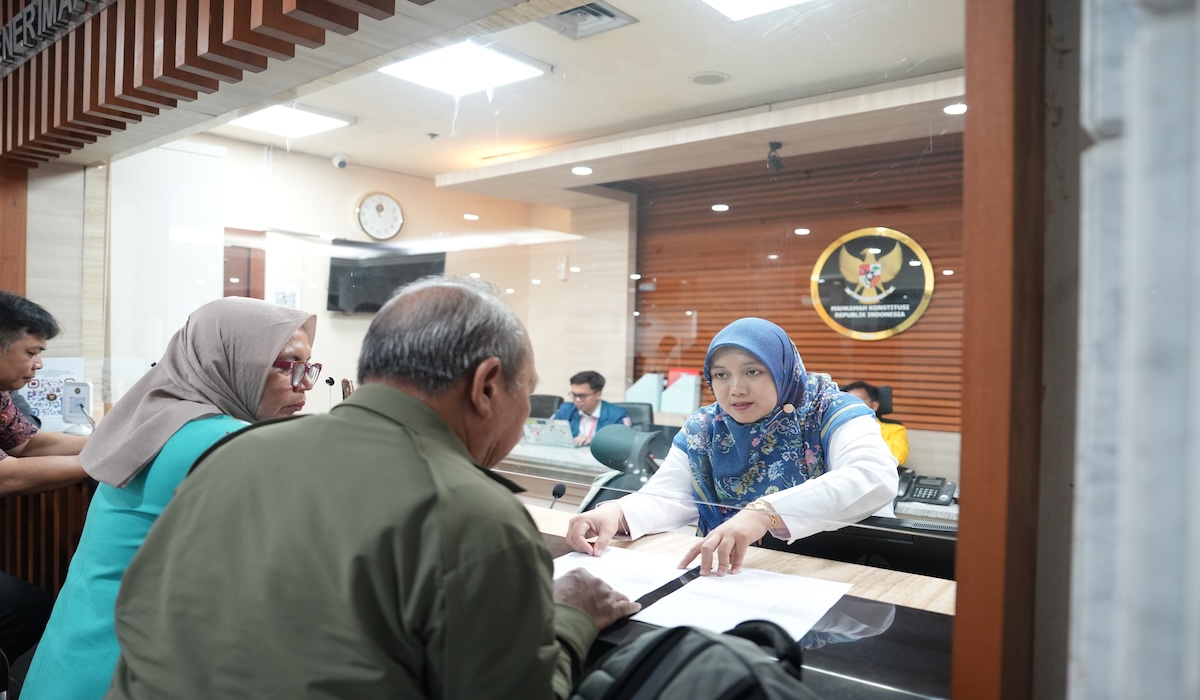
Ahead of the final phase of the judicial review of the Job Creation Law at the Constitutional Court, academic support for the existence of the Land Bank Agency is strengthening.
A total of 12 academics from various universities in Indonesia have submitted a legal opinion, or amicus curiae, to the Constitutional Court. The document was submitted two days before the conclusion of the hearing proceedings, serving as independent input for the panel of judges in assessing the constitutionality of the Land Bank Agency.
The academics emphasised that the legal opinion is not intended to support either the petitioners or the government. According to them, the study was prepared as a scientific contribution based on philosophical, constitutional, and evolving social reality approaches.
“We, as a group of 12 academics, are submitting this legal opinion as amicus curiae. We do not take sides between the petitioners and the government. The study we present is viewed from philosophical, constitutional, and ongoing social fact perspectives,” said Professor M. Hadin Muhjad of the Faculty of Law, Lambung Mangkurat University.
In the document, the academics maintain that the existence of the Land Bank Agency does not contradict the 1945 Constitution of the Republic of Indonesia. On the contrary, the institution is deemed to be in line with the mandate of Article 33, paragraph (3) of the 1945 Constitution, which asserts that land, water, and natural resources are controlled by the state for the greatest prosperity of the people.
Hadin noted that the Land Bank Agency could serve as an important instrument in strengthening national land governance. He also refuted concerns that the agency would clash with the authority of the Ministry of Agrarian Affairs and Spatial Planning/National Land Agency (ATR/BPN).
According to him, the authority of the Land Bank Agency is limited to management aspects. Therefore, its existence does not take over or interfere with the authority of the Ministry of ATR/BPN.
“Its authority is very limited, strictly in the field of management, so it will not interfere with the Ministry of ATR’s authority. There is no overlap,” Hadin asserted.
Viewed as relevant to improving land governance, the Land Bank Agency is also seen as having the potential to provide a solution to the slow implementation of agrarian reform. To date, this agenda has often been hindered by bureaucratic issues, land availability, as well as land conflicts and disputes.
“This is to break the deadlock in agrarian reform that has existed for so long. A deadlock that is often regarded as a failure. The presence of the Land Bank can provide real assistance in resolving these issues,” said Hadin.