
12,856 KAI Assets Underpin National Mobility and Supply Chain Fluidity
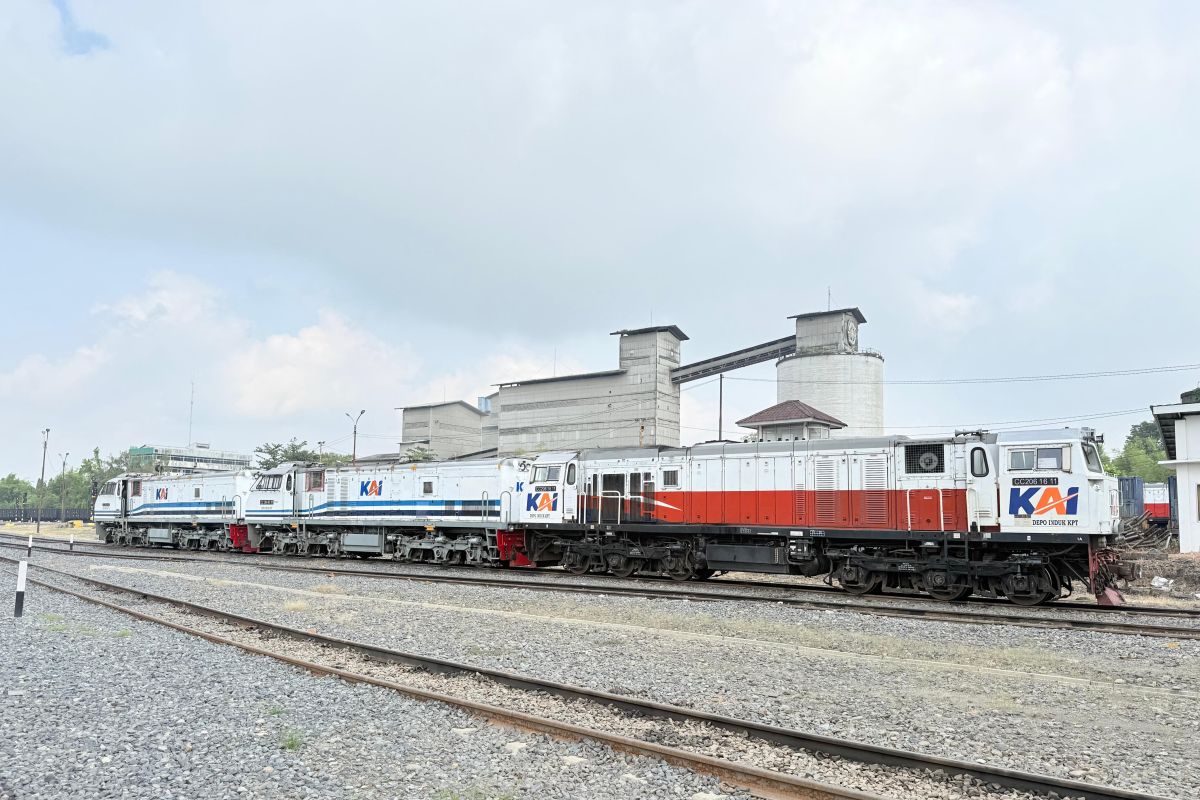
As of June 2026, PT Kereta Api Indonesia (Persero) manages a total of 12,856 assets, comprising 551 locomotives, 1,064 Electric Rail Trains (KRL), 2,238 carriages, 8,907 freight wagons, and 96 Diesel Electric Rail Trains/Indonesia (KRDE/I). The growing need for mobility and logistics requires sustained asset readiness.
The scale of asset management is necessary to maintain the continuity of railway services across various regions. Each day, asset readiness must be aligned with travel schedules, capacity requirements, operational patterns, track characteristics, and the types of commodities served.
Vice President of Corporate Communication at KAI, Anne Purba, stated that assets are a primary element in maintaining the capacity and reliability of the rail-based transport system. “Public mobility and logistics distribution require adequate asset readiness. Every locomotive, KRL, carriage, wagon, and KRDE/I has a complementary function to keep services safe, reliable, and aligned with demand,” Anne said.
Of the total assets, 8,907 units, or approximately 69.28 per cent, are freight wagons. This is followed by 2,238 carriages (17.41 per cent), 1,064 KRL units (8.28 per cent), 551 locomotives (4.29 per cent), and 96 KRDE/I units (0.75 per cent). Locomotives are used to haul passenger and freight trains, while carriages serve customers and wagons support commodity distribution based on type, capacity, and handling requirements.
KRL and KRDE/I units support services in urban areas, agglomerations, and local routes according to their respective operational characteristics. These differing functions also determine crew requirements, train formations, inspection patterns, and maintenance cycles.
This scale of management aligns with high public demand for rail transport. During the first half of 2026, the KAI Group served 258,993,359 passengers, a 7.55 per cent increase from 240,805,920 passengers in the same period of 2025. The growth reflects the railway’s increasing role in supporting work, education, business, access to service centres, tourism, and inter-regional travel.
“Customer growth must be matched by planned capacity. Asset availability, technical reliability, maintenance facilities, and continuous renewal are interconnected in meeting mobility needs,” Anne said.
For freight services, KAI recorded a volume of 32,498,043 tonnes during the first half of 2026. This consisted of 26,534,095 tonnes of coal and 5,963,948 tonnes of non-coal commodities, including cement, fuel oil, containers, bulk and plantation goods, general cargo, and parcel shipments. These services support energy, construction, industrial, and trade supply chains across various regions.
Each commodity requires specific wagon types, locomotive power, train formations, travel patterns, and loading and unloading facilities. Therefore, the growth of logistics services must be balanced with asset readiness that matches the development of industrial needs and cargo characteristics.
Before entering service, every asset undergoes inspection to ensure compliance with technical, safety, and operational requirements. Periodic maintenance is carried out based on operating hours, distance travelled, component condition, and inspection results. Maintenance is conducted through depots and Balai Yasa workshops according to the level and scope of work. Depots handle inspections and maintenance to support daily operations, while Balai Yasa facilities perform periodic maintenance and larger-scale overhauls.
Anne explained that maintaining the readiness of thousands of assets requires long-term planning covering procurement, renewal, maintenance, spare parts availability, human resource competency strengthening, and maintenance facility development. “The sustainability of railway services requires connectivity between operational needs, technological development, industrial capacity, standardisation, and investment planning. Synergy among all stakeholders is essential so that asset capacity can keep pace with the development of customer mobility and national logistics needs,” she said.
KAI continues to strengthen coordination between operational units, depots, Balai Yasa, traffic controllers, and other supporting units. Information on asset conditions is used to align inspection and maintenance schedules with service requirements. “With strong planning and ecosystem support, railway assets can be continuously developed to respond to the growth of public mobility, strengthen inter-regional connectivity, and maintain the fluidity of the national supply chain,” Anne concluded.