
12.2 kg of crystal meth and hundreds of ecstasy tablets destroyed at East Kalimantan Police
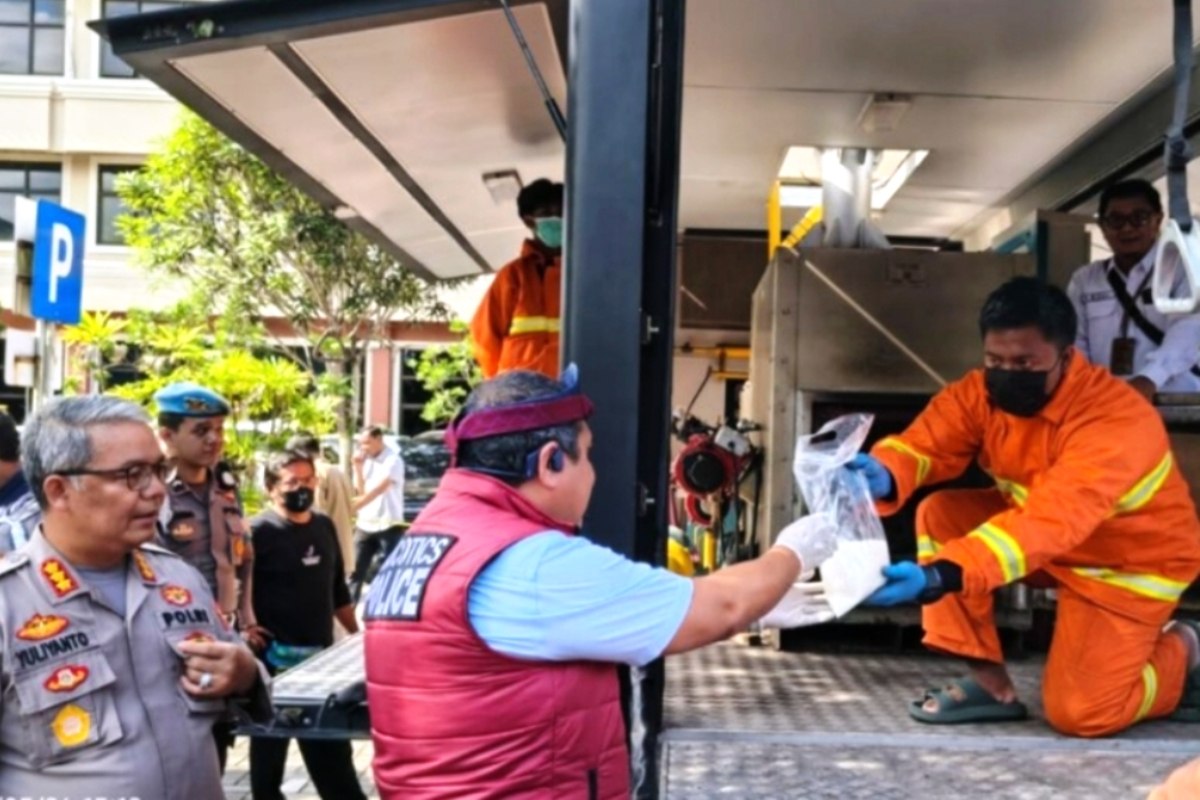
The Narcotics Crime Investigation Unit of East Kalimantan Police destroyed narcotics evidence, including over 12 kilograms of crystal methamphetamine, hundreds of ecstasy tablets, and hundreds of grams of etomidate, on Tuesday (26 May) at the Mahakam Building courtyard of East Kalimantan Police.
Director of the Narcotics Crime Investigation Unit of East Kalimantan Police, Police Commissioner Romylus Tamtelahitu, stated that the evidence was gathered from narcotics cases between April and May 2026 and had received court approval for destruction. The total destroyed included 12,225 grams of crystal meth, 1,185 ecstasy tablets, and 349.41 grams of etomidate.
He revealed that this was the first time they used an incinerator vehicle from the Samarinda office of the National Agency of Drug and Food Control (BPOM) for destruction, to enhance security and reduce environmental pollution.
‘The incinerator was chosen because the large volume of evidence required a more effective destruction method than conventional ones.’
He added that the vehicle’s capacity of up to 25 kilograms makes it safer, more efficient, and environmentally compliant.
He added that the use of this incinerator technology is part of modernising narcotics evidence handling in East Kalimantan, with coordination with BPOM Samarinda conducted a month before the destruction.
‘We conducted the destruction publicly to ensure transparency in law enforcement and confirm that all evidence from cases was fully destroyed,’ he stated.
East Kalimantan Police hope the technology will become the new standard for narcotics evidence destruction in the region, enhancing security and supporting environmental protection during law enforcement.
Samarinda BPOM Chief Agung Kurniawan confirmed the incinerator vehicle met technical and environmental standards.
The equipment operates at up to 1,000 degrees Celsius, completely incinerating materials into ash. The incinerator system also features multi-layered smoke filtration to process emissions before release into the atmosphere.
‘With the integrated filtration system, the emissions meet standards and are more environmentally friendly than conventional burning methods,’ he concluded.