
119.44 Million Litres of Subsidised Fuel Support Rail Services, KAI Strengthens GCG-Based Governance
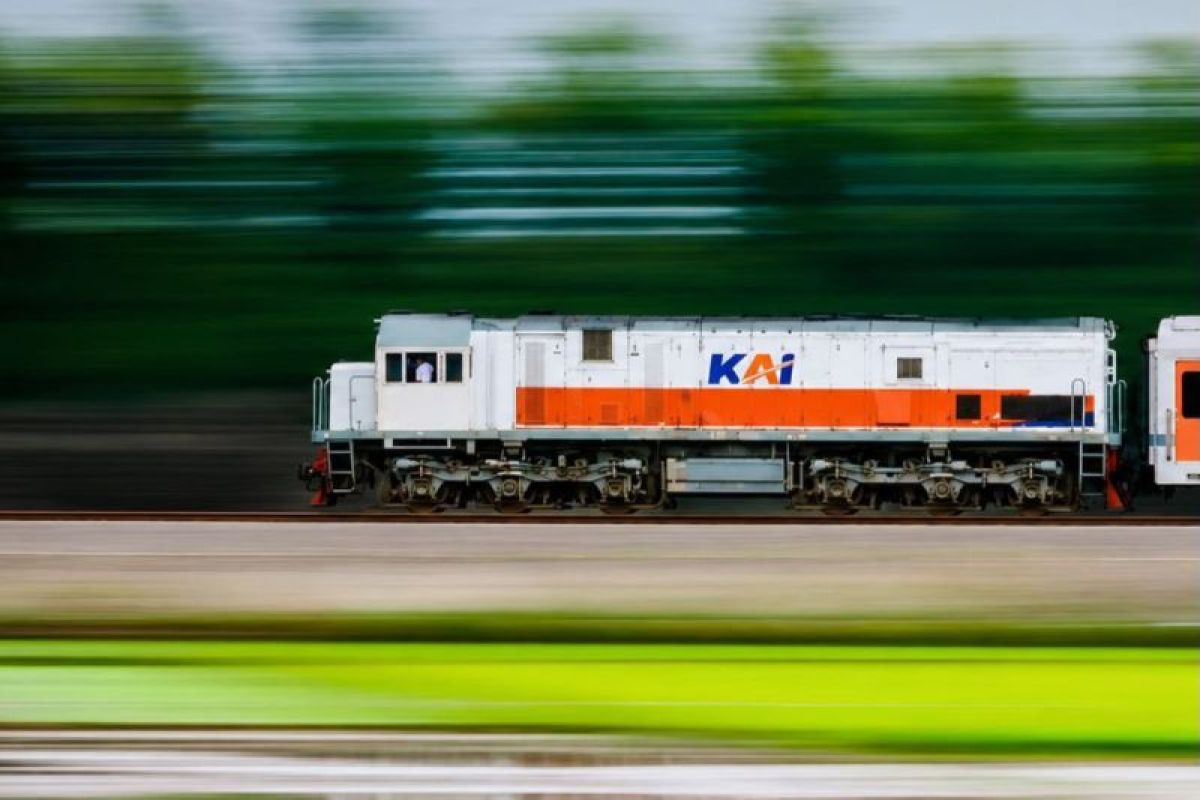
Subsidised fuel is a crucial support for the continuity of passenger train services and certain logistics operations in accordance with its designation. As it originates from state allocations, its utilisation requires detailed record-keeping, quota control, and traceable accountability. As of 13 July 2026 at 13.45 WIB, PT Kereta Api Indonesia (Persero) recorded the realisation of subsidised fuel usage at 119,442,914 litres, or 55.73 percent of the 2026 quota of 214,342,000 litres. With this realisation, the remaining available quota stands at 94,899,086 litres, or 44.27 percent. Vice President of Corporate Communication at KAI, Anne Purba, stated that the management of subsidised fuel is embedded within a Good Corporate Governance (GCG) framework, particularly through data transparency, usage accountability, compliance with designations, and periodic control. “Every litre of subsidised fuel is a mandate that must be managed appropriately and accountably. Usage data is monitored based on quota, realisation, remaining quota, type of service, and operational region,” said Anne. Of the total subsidised fuel realisation, 106,370,771 litres were used for passenger train services. This amount is equivalent to 89.06 percent of KAI’s total subsidised fuel realisation. Its usage reached 55.69 percent of the passenger service quota of 191,022,000 litres, leaving 84,651,229 litres available to support services until the end of the year. Monitoring is also conducted on logistics services that receive allocations according to regulations. During the same period, subsidised fuel usage for container services reached 9,404,309 litres, parcel services 1,964,531 litres, cement 1,412,702 litres, and clinker—a semi-finished material in cement production—totalled 290,601 litres. In terms of quota percentage, container services have used 60.62 percent of their annual allocation. Usage for parcels was recorded at 52.22 percent, clinker at 42.42 percent, and cement at 42.04 percent. This breakdown helps the company proportionally assess the energy needs of each service without mixing allocations between activities. “Data-based monitoring provides the company with the space to observe usage patterns early. When there are changes in operational needs, handling can be carried out while still referring to regulations and quota availability,” Anne said. For passenger services, the largest usage volume was recorded in Operational Area 8 Surabaya at 26,643,480 litres, followed by Operational Area 1 Jakarta with 26,260,574 litres, and Operational Area 6 Yogyakarta with 13,088,062 litres. These figures reflect the operational needs of diesel facilities in each region, not an assessment of performance between areas. The implementation of GCG is also strengthened through the separation of records between subsidised and non-subsidised fuel. Up to 13 July 2026, the realisation of non-subsidised fuel was recorded at 20,673,801 litres, or 52.88 percent of the annual target of 39,098,121 litres. Thus, KAI’s total subsidised and non-subsidised fuel usage reached 140,116,715 litres, equivalent to 55.29 percent of the overall 2026 target. The use of non-subsidised fuel includes coal logistics services at 13,141,066 litres, fuel logistics services at 3,089,035 litres, activities outside passenger and certain freight train services at 3,130,509 litres, pulp at 815,253 litres, crude palm oil at 307,972 litres, workshop activities at 153,200 litres, and fertiliser at 36,950 litres. “The separation of subsidised and non-subsidised fuel is an important part of governance discipline. Subsidised allocations are used according to their designation, while needs outside that allocation are recorded as non-subsidised usage,” Anne explained. In line with strengthening energy governance, KAI has also begun the gradual implementation of B50 biodiesel for diesel facilities starting 1 July 2026. B50 is a blend of 50 percent plant-based biodiesel and 50 percent diesel fuel. Its application covers locomotives and generator trains following technical testing, component monitoring, and evaluations of safety and operational reliability. The government has also established a three-month transition period for technical adjustments and the management of existing fuel supplies. According to Anne, changes in fuel specifications still require controls as robust as quota management. Monitoring is directed at engine performance, fuel consumption, combustion stability, filter conditions, emissions, and the reliability of facilities during service. “The transition to B50 is being carried out in a measured way. Energy governance, technical readiness, travel safety, and service continuity must be within a single control framework,” Anne concluded. Through updated monitoring based on service type and operational region, fuel availability can be maintained according to needs until the end of the year. This data also serves as a control instrument to ensure that state subsidy support provides benefits that are appropriate, measurable, and consistent for national railway services.