
116 High-Risk Level Crossings Closed as KAI Accelerates Reduction of Accident-Prone Areas
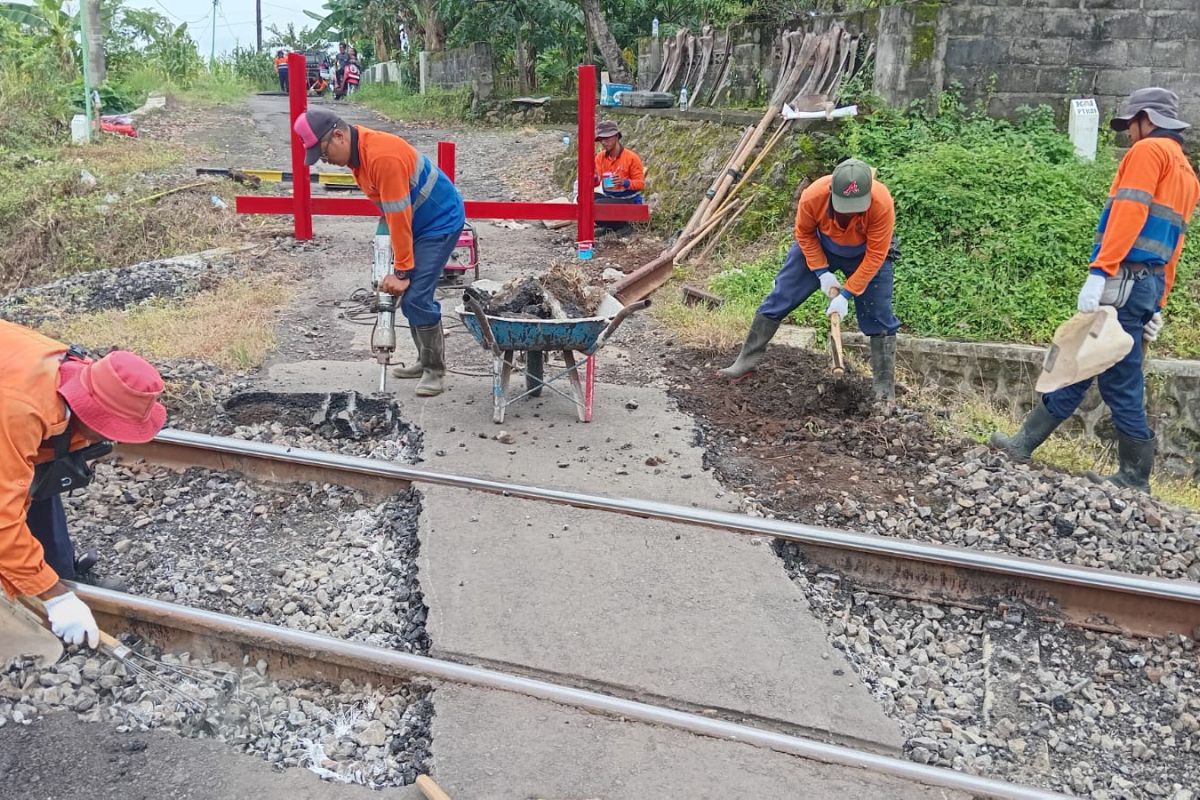
Jakarta (ANTARA) - Public mobility continues to evolve alongside increasing economic, educational, and social activities across various regions. Amidst this growth, safety remains an inseparable factor in the development of a reliable transportation system. One of the ongoing focuses of PT Kereta Api Indonesia (Persero) is reducing level crossing points that pose high risks to both train journeys and road users.
As part of these efforts, as of 2 June 2026, KAI, alongside various stakeholders, has closed 116 of the 172 priority crossings targeted for national handling. This achievement represents 67 per cent of the established target, while 56 other points are still in the process of being finalised through coordination with local governments, regional authorities, and local communities.
This programme is part of the management of 1,810 unmanned crossings spread across KAI’s operational areas. Of that number, 172 crossings with road widths of less than two metres have been recommended for closure due to their high risk levels to railway safety and road users. Meanwhile, the remaining 1,638 points are prioritised for safety enhancements through various security measures based on field conditions.
KAI Vice President of Corporate Communication, Anne Purba, stated that the closure of crossings is conducted based on comprehensive safety identification and studies. This step is directed towards reducing risk points that have the potential to cause accidents.
“Every closed crossing has undergone an evaluation and safety consideration process. Our main focus is to reduce risk points that could potentially lead to accidents. The more high-risk crossings we successfully close, the greater our opportunity to create safer journeys for the public and for railway operations,” said Anne.
According to Anne, the achievement of 116 closed points demonstrates strengthening collaboration between KAI, central government, local governments, regional authorities, and the community in supporting the improvement of transport safety. Such support is a vital factor because every crossing possesses different characteristics, environmental conditions, and handling requirements.
This collaboration is increasingly relevant given that level crossings are intersection points between railway tracks and highways that require high discipline and vigilance from all road users. Therefore, reducing the number of high-risk crossings serves as an effective preventive measure to suppress accident potential.
KAI data shows that between 2023 and 24 May 2026, there were 1,074 accidents at level crossings involving a total of 964 victims, consisting of 370 fatalities, 247 serious injuries, and 347 minor injuries. Notably, 80 per cent of these incidents occurred at unmanned crossings, while 88 per cent of accidents were triggered by the behaviour of driving through barriers while a train was passing. This data serves as a reminder that safety requires continuous efforts from all parties, through both facility improvements and compliance with traffic regulations.
Anne added that the benefits of closing crossings are often not immediately visible in daily life. However, every successfully closed point means one less potential risk that could endanger the public in the future.
“When a high-risk crossing is successfully closed, what we are actually doing is reducing the chance of an accident occurring. Safety always begins with prevention. Therefore, community support is essential to ensure that closed crossings are not reopened independently, so that the safety benefits can be felt in the long term,” Anne concluded.
KAI will continue to accelerate the resolution of the 56 remaining points currently in progress so that the target of closing 172 priority crossings can be achieved promptly. Through these steps, KAI hopes to reduce more accident-prone areas, ensuring that railway journeys and community activities around the tracks can proceed more safely, orderly, and securely.