
115 Jakarta Intersections Now Equipped with AI-Based Traffic Lights
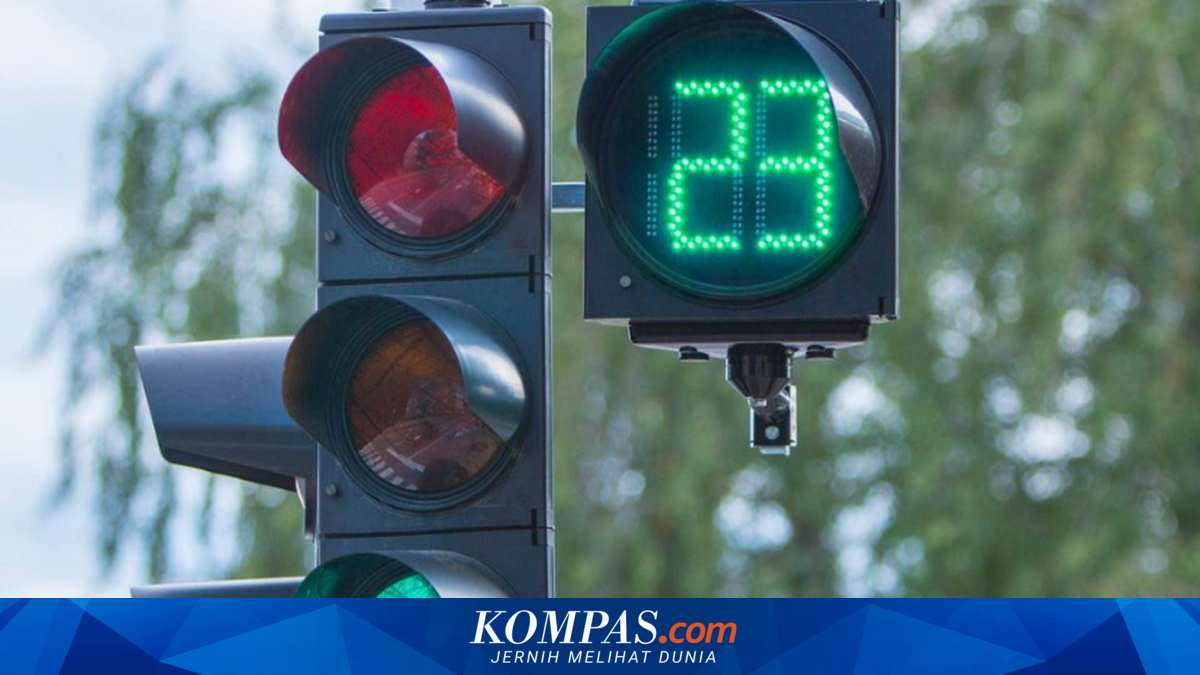
JAKARTA, KOMPAS.com - The Jakarta provincial government is developing a smart traffic light system based on artificial intelligence (AI) to alleviate traffic congestion in the capital.
Deputy Head of the Jakarta Transportation Department, Ujang Himawan, said that this technology has now been installed at 115 of the 321 intersections, or about 35.8 per cent.
“115 intersections have been developed into an ITCS system. This represents 35.8 per cent of the total 321 signalled intersections in Jakarta,” said Ujang when confirmed on Thursday (26/2/2026).
“This system works in a hybrid manner, applying adaptive green time in real-time to respond to actual conditions on the ground, while also being supported by a predictive system that can predict traffic volume up to 60 minutes in advance based on historical data,” said Ujang.
The Jakarta ITCS system is equipped with a recognition system that can identify vehicle types, read license plates, and detect traffic violations.
Meanwhile, the predictive system enables the optimal setting of minimum and maximum green light times, resulting in smoother traffic flow at intersections compared to conventional methods.
In addition, the development of this system also takes into account coordination between intersections to form an integrated road network.
However, there are several obstacles to installing the ITCS, such as excavations or road works.
In addition, vandalism that damages traffic light cables also has an impact.
Nevertheless, monitoring is carried out centrally through the Network Operation Center (NOC), so that the system is always updated automatically.
With the implementation of this AI-based smart traffic light system, the Jakarta provincial government hopes to reduce congestion, improve fuel efficiency, and reduce carbon emissions (CO2).