
112 Years On, Panama Canal Strengthens Strategic Role in Global Trade
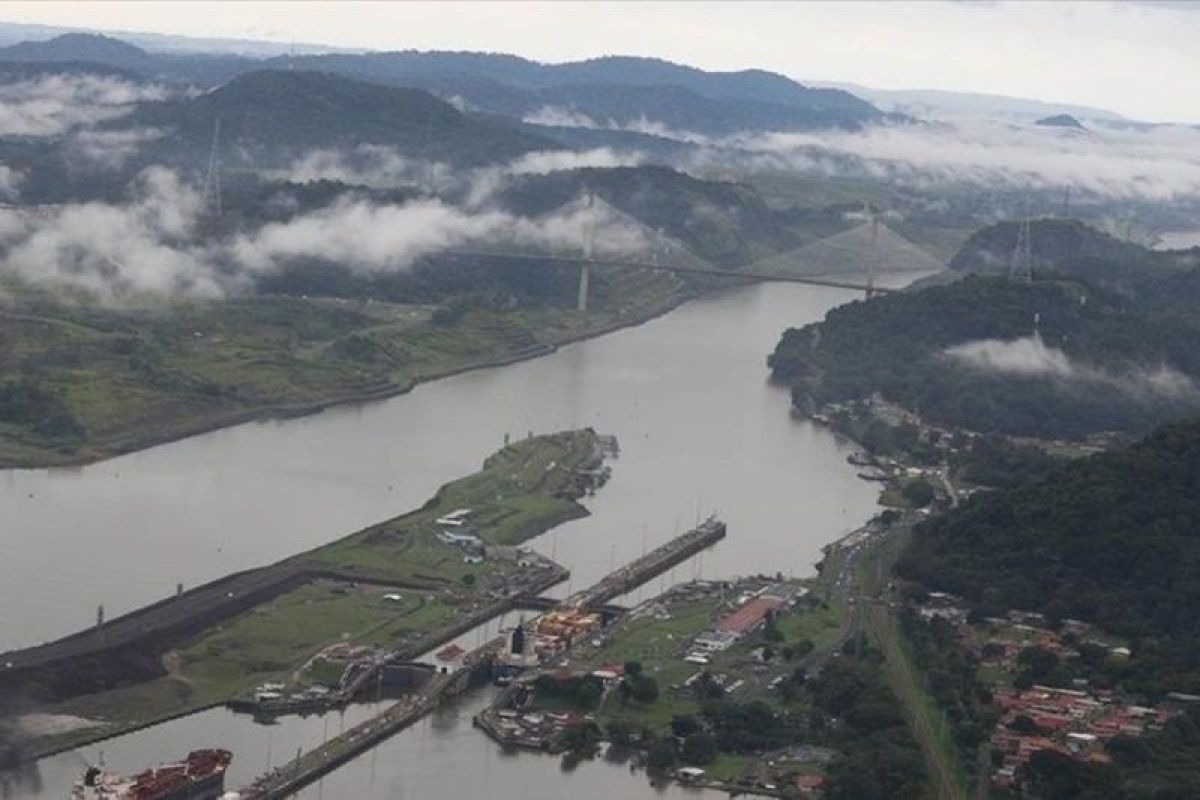
The Panama Canal continues to strengthen its role as a strategic route for world trade, while supporting global supply chains and Panama’s economy as it marks 112 years since its official opening.
As one of the key links in the global supply chain and maritime transport, the canal remains an important part of international trade thanks to a treaty-based legal framework, an advanced lock system, and steadily growing trade performance.
Turkey’s Anadolu news agency compiled the latest data on the canal, including details of its structure and operation.
Located in Panama, between Costa Rica and Colombia, the roughly 77-kilometre waterway supports the local economy while cutting thousands of kilometres from intercontinental shipping routes.
Data shows that the canal connects 180 maritime routes and 1,920 ports, serving 170 countries, and recorded 13,404 vessel transits in 2025.
The total tonnage of vessels passing through the canal during fiscal year 2025 reached approximately 489.2 million tonnes based on the Panama Canal Universal Measurement System (PC/UMS).
An average of 34 vessels transited the canal each day in January, rising to 37 vessels in March. On the busiest days, the number of vessel transits exceeded 40.
The canal handles around 5 percent of global maritime trade, while more than 70 percent of the cargo passing through it originates from or is destined for the United States.
The canal’s operations are supported by 9,014 employees, while revenue generated reached approximately USD 5.7 billion in 2025.
The canal’s contribution extends beyond international trade to Panama’s domestic economy. The Panama Canal contributed around USD 4.2 billion (approximately IDR 74.7 trillion) to the country’s economy in 2025, with its direct contribution to gross domestic product (GDP) estimated at 3.4 percent.
Locks rising 26 metres
The main geographical and technical feature of the Panama Canal is its system of stepped locks that lift vessels up to 26 metres above sea level.
Because of the differences in elevation along the canal, a full transit generally takes between eight and 10 hours.
After entering the canal, vessels move into enclosed lock chambers. Inside, the water level is raised gradually to lift the vessel up to 26 metres above sea level.
The vessel then crosses Gatun Lake, a freshwater reservoir, before a lock system using gravity lowers it back to sea level and the vessel continues its voyage towards the open sea.
The canal cuts the sailing distance between the east and west coasts of the United States by around 15,000 kilometres. For vessels sailing between Europe and East Asia, the canal reduces the journey by around 3,700 kilometres.
The route is operated by the Panama Canal Authority, an autonomous public body that applies dynamic tariffs based on global shipping demand and seasonal water levels.
Under Article 3 of the 1977 Neutrality Treaty governing the canal, warships of all nations may transit the Panama Canal without being subjected to inspection, search, or surveillance as a condition of transit, regardless of the vessel’s internal activities, propulsion system, origin, destination, or armament.
Source: jawawa.id (https://jawawa.id/newsitem/112-years-on-panama-canal-strengthens-strategic-role-in-global-trade-1786719267)
Originally published by Antara (Indonesian) (https://www.antaranews.com/berita/5695107/112-tahun-terusan-panama-perkuat-peran-strategis-perdagangan-global), translated from Indonesian