
11 Supreme Court Justices and 3 Ad Hoc Judges Officially Inaugurated
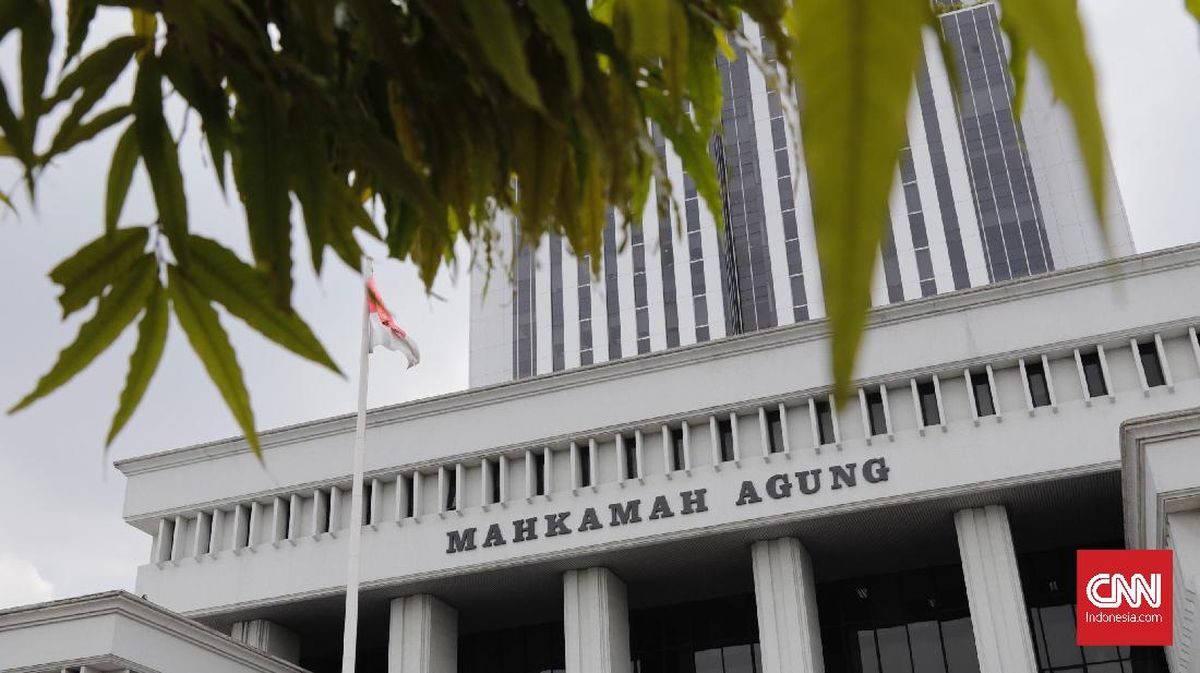
A total of 11 Supreme Court Justices, 2 Human Rights (HAM) Ad Hoc Judges, and 1 Corruption Crime (Tipikor) Ad Hoc Judge of the Supreme Court of the Republic of Indonesia were officially inaugurated today, Wednesday (2/9).
The inauguration took place in the Prof Koesoemah Atmadja room, MA RI Tower, Jakarta. According to an official statement from the Supreme Court Public Relations department, the swearing-in ceremony and inauguration of the Supreme Court Justices and Ad Hoc Judges were led by the Chief Justice of the Supreme Court, Sunarto.
The inauguration is a follow-up to the determination by Commission III of the Indonesian House of Representatives (DPR RI) regarding the candidates for Supreme Court Justices and Ad Hoc Judges, who were declared to have passed the fit and proper test on 13 August 2026, and subsequently established through a Presidential Decree.
The selection series for the Supreme Court Justices and Ad Hoc Judges has been ongoing since March 2026, encompassing administrative selection, quality testing, health and personality examinations, and interviews, followed by the fit and proper test at the DPR RI.
The eleven inaugurated Supreme Court Justices will serve across four chambers within the Supreme Court, namely the Criminal Chamber, Civil Chamber, Religious Chamber, and the Special Tax Administrative Court (TUN) Chamber.
The eleven Supreme Court Justices consist of:
Criminal Chamber:
Syamsuna Arief
Sugiyanto
Sudharmawatiningsih
Dhifla Wiyani
Civil Chamber:
Sobandi
Nurnaningsih
Religious Chamber:
Musthofa
Mamat Ruhimat
Special Tax Administrative Court (TUN) Chamber:
Maftuh Effendi
L.Y. Hari Sih Advianto
Yeheskiel Minggus Tiranda
Meanwhile, the two Human Rights Ad Hoc Judges inaugurated are Edwin Partogi Pasaribu and Roki Panjaitan, and the one Corruption Crime Ad Hoc Judge is Sudiyo.
Public Criticism
The selection process for these Supreme Court Justices has drawn criticism from civil society groups organised under the Judicial Monitoring Coalition (KPP), which comprises several non-governmental organisations, as well as the Activists for Independence and Reform of Judicial Institutions (PILAR), consisting of 29 individuals.
These civil society groups stated that the most recent selection process for Supreme Court Justice candidates was of poor quality. There are five reasons supporting this argument.
Firstly, the selection process was conducted too rapidly, compromising the quality of the candidates selected during the Judicial Commission (KY) stage. Secondly, public participation in open interviews at the KY was restricted, as there was no longer an opportunity for the public to be involved in posing in-depth questions directly to the candidates.
Thirdly, some of the selected candidates are alleged to have strong political affiliations with individuals in the executive and legislative branches. Fourthly, the quality of several selected candidates falls far below the minimum standard required for a Supreme Court Justice. This can be clearly observed from the candidates’ minimal basic understanding of fundamental legal theories, laws, and related regulations, as well as their difficulty in explaining issues related to the expertise required for their assigned chambers.
Finally, the low quality of the candidates is said to align with the quality of questions from the panelists at the KY and Commission III of the DPR, which were described as being merely formalistic, repetitive, and failing to touch upon the substance necessary to probe the true quality of the candidates.
Source: jawawa.id (https://jawawa.id/newsitem/11-supreme-court-justices-and-3-ad-hoc-judges-officially-inaugurated-1788357773)
Originally published by CNN Indonesia (https://www.cnnindonesia.com/nasional/20260902190525-12-1399321/11-hakim-agung-dan-3-hakim-ad-hoc-resmi-dilantik-ini-daftarnya), translated from Indonesian