
11 September 2001: Traces of Terror from Germany
“The world has changed today,” said German President Johannes Rau, amidst the shadows of the burning and collapsing Twin Towers of the World Trade Center in New York. Nearly 3,000 people died on 11 September 2001, after terrorists hijacked four passenger planes and used them as deadly weapons.
Eleven German citizens died. The German head of state struggled to find the words. “We do not yet know the political and social impact of what has happened today, which we have witnessed transfixed on television screens, with fear and almost unable to think.” Shortly thereafter, the world learned that the victims came from 9je 92 countries, including eleven German citizens.
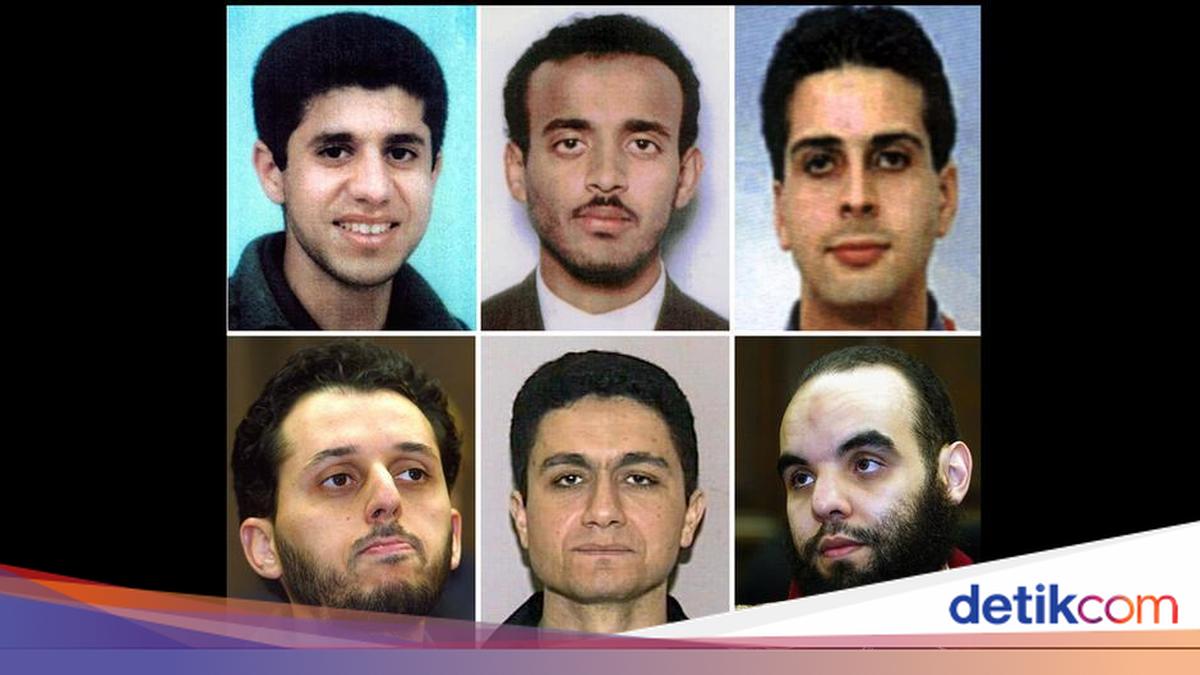
A day after the attacks, rapidly circulating news became a certainty: three of the four pilots allegedly involved in the final attacks lived in Hamburg. The leader of the Islamist terrorist group was believed to be Mohammed Atta, an Egyptian citizen who came to the northern German port city to study in the early 1990s.
At some point, the young man began to be exposed to radicalism, particularly at the Al-Quds Mosque, near Hamburg’s main station, which was later closed by security forces. The last three years of his life were spent in a house in the Harburg district with two other perpetrators believed to be involved in the attacks.
He became the defendant in the world’s first trial related to the 11 September 2001 attacks, facing charges of aiding the operation. The Hanseatic Higher Regional Court imposed a maximum sentence of 15 years in prison in 2003 for aiding the murder of thousands of people and being a member of a terrorist organisation.
After serving his sentence, al-Motassadeq was deported to his home country, Morocco. Another suspect from Atta’s circle was Ramzi Bilibsh, who was born in Yemen. Since 2006, he has been held without trial in the United States prison in Guantanamo.
In that prison, which violates international law, the United States holds hundreds of suspects, including Murat Kurnaz, who was born in Bremen. He was only released in August 2006, after almost five years, without ever being proven to be involved in the terrorist attacks. Kurnaz later poured his story into a book that was adapted into a film in 2013.
Meanwhile, several commissions of inquiry in the Bundestag sought to uncover why Kurnaz and other suspects were wrongly targeted by American and German intelligence agencies. One of the witnesses called was the Foreign Minister at the time, who now serves as the German President, Frank-Walter Steinmeier.
The key question was: why did German security authorities in 2002 reject the possibility of the return of a German-blooded detainee holding a Turkish passport? Steinmeier explained, “No one doubted, including myself, that Kurnaz experienced terrible things in Guantanamo. Therefore, we also endeavoured to ensure he was treated in accordance with the principles of the rule of law. But at the same time, please understand, we also had an obligation to maintain security in our own country.”
Gerhard Schröder promised “unlimited solidarity”. The Kurnaz case illustrates the pressure faced by German politics following the terrorist attacks in the United States. A day after the attacks, Chancellor Gerhard Schröder delivered a government statement. “11 September 2001 will be recorded in history as a dark day for us all,” said the Social Democratic Party politician.
He stated that he had conveyed the deepest condolences of the entire German people to the President of the United States. “I also guarantee Germany’s unlimited solidarity, I emphasise: unlimited solidarity,” said Schröder. Germany, he said, would certainly provide any assistance needed by the citizens and government of the United States,