
100 Million Indonesians Have Participated in the Free Health Check Programme
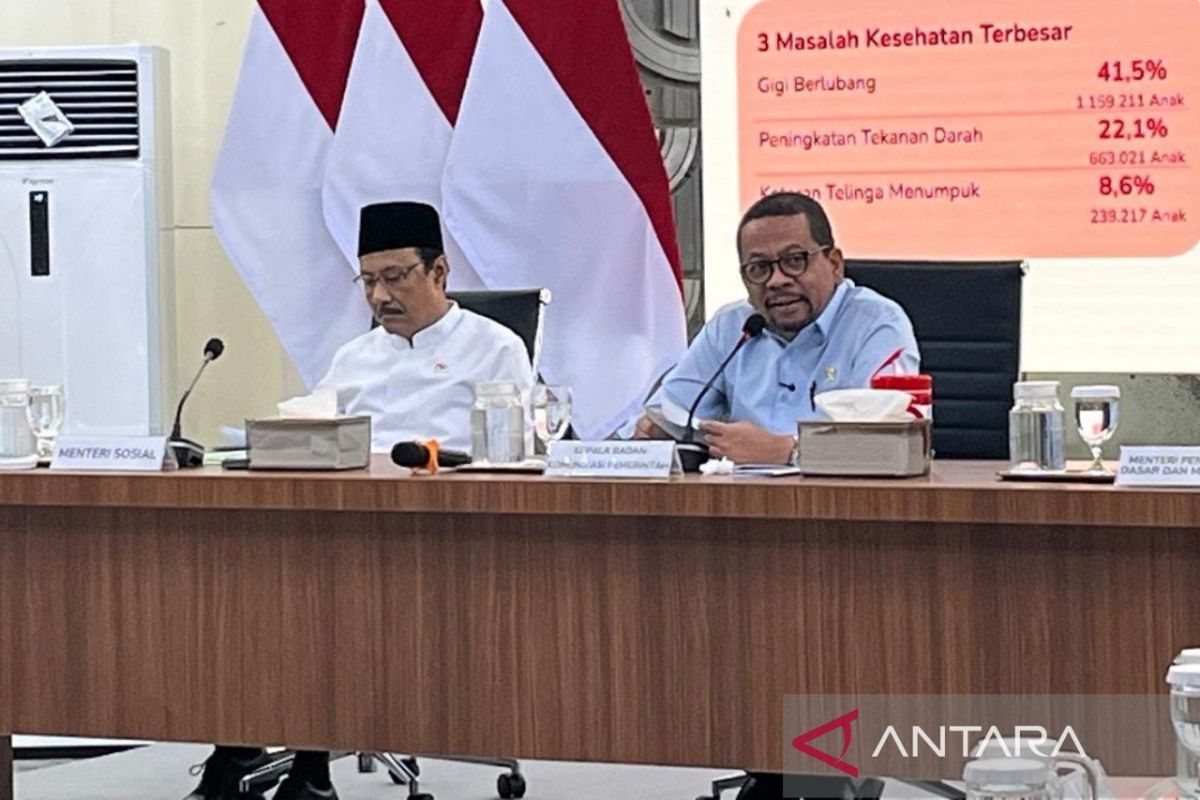
Jakarta (ANTARA) - Head of the Indonesian Government Communication Agency (Bakom) RI, Muhammad Qodari, stated that by May 2026, 100 million Indonesians have participated in the Free Health Check (CKG) programme. “A total of 100 million Indonesians have received CKG,” Qodari said during a press conference at the Bakom RI Office Auditorium in Jakarta on Wednesday. Qodari explained that throughout 2025, the programme served more than 70 million participants, and from the beginning of 2026 to early May, it added more than 30 million people, bringing the total number of individuals benefiting from this service to 100 million. Qodari noted that this figure represents about one-third of Indonesia’s total population, which is approaching 290 million people. Therefore, the government continues the programme to expand the reach of health screening services to the public. Specifically for school-age groups, the Ministry of Health recorded that 4.8 million children underwent health screenings in 48,000 schools from 1 January to 3 May 2026. From these results, 41 per cent or about 1.1 million children were found to have cavities, 22.1 per cent or 663,000 children had elevated blood pressure, and 8.6 per cent or 239,000 children had earwax buildup. Furthermore, Qodari stated that from the total participants who underwent screening, around 16.8 million people require follow-up treatment, with 1.4 million of them already recorded as receiving further management. The adult group aged 18 to 59 years dominates with 60 per cent, followed by school-age children aged 7 to 18 years at 16 per cent. He said the CKG programme is designed to ensure early detection of various health problems, especially among schoolchildren, so that treatment can be carried out more quickly. This examination is also the government’s effort to reach people who do not yet have access or awareness to undergo routine health checks. “Through CKG, the government obtains more systematic student health data, and this data serves as the basis for designing more appropriate interventions, both in the education and health sectors,” he said. Findings from previous CKG implementations show that several child health problems are often not detected early, such as lack of physical fitness, dental health disorders, and anaemia, which have the potential to hinder the learning process and growth and development. Qodari mentioned that the programme also aims to reach the outermost, outermost, and underdeveloped regions so that no child is left behind in accessing basic health services. “Through this programme, the government not only maintains student health but also builds the foundation for a healthier, more productive human resource base ready to face the future,” he said.