
100 GWp Solar Power Development Seen as Creating Energy Independence and Economic Growth
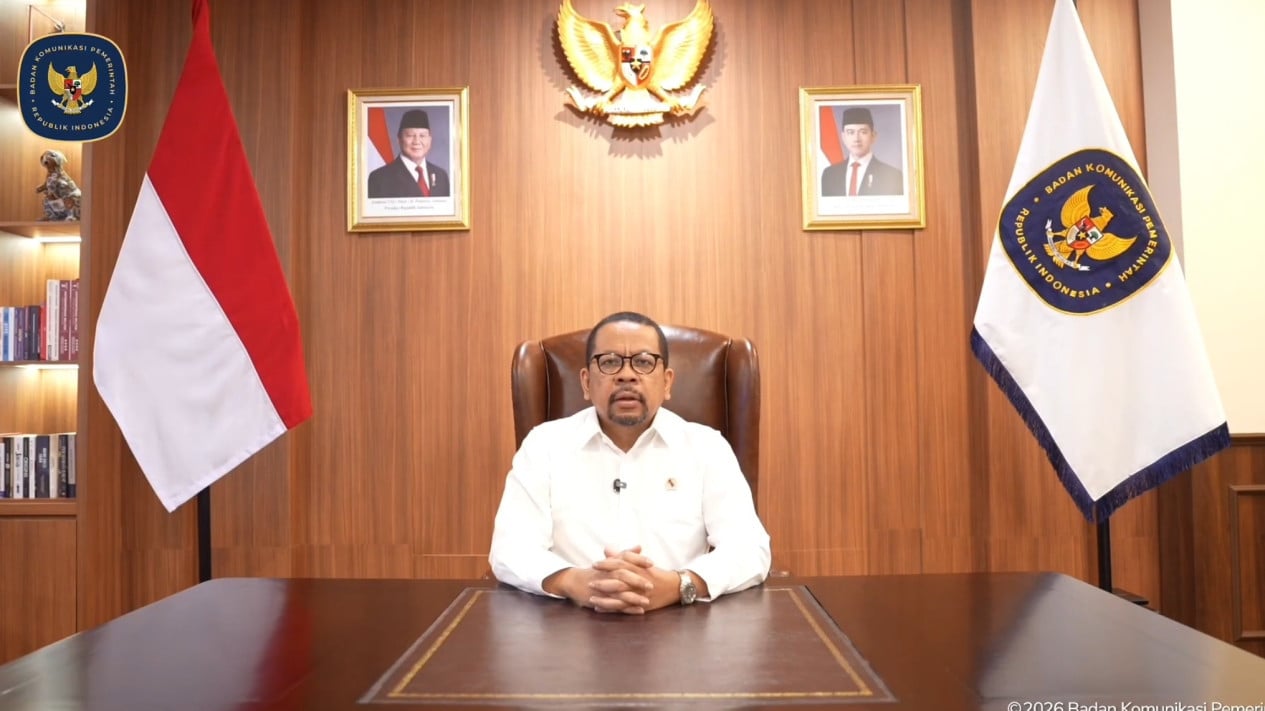
Head of the Government Communication Agency (Bakom) Muhammad Qodari has stated that the 100 Gigawatt Peak (GWp) Solar Power Plant (PLTS) programme is not merely a target on paper, but a concrete step by the government to build energy independence while strengthening the national economy.
Qodari explained that the commencement of the 100 GWp PLTS programme is not simply about setting targets, but rather a tangible step towards building new, stronger, more independent and sustainable energy sources for Indonesia.
“The commencement of the 100 Gigawatt Peak (GWp) Solar Power Plant programme is not merely about setting targets. This is a concrete step to build new energy sources that are stronger, more independent and sustainable for Indonesia,” said Qodari in his statement in Jakarta on Monday, 31 August 2026.
This step, Qodari said, has already begun to be realised. On 25 August 2026, President Prabowo Subianto conducted the groundbreaking for solar power plant development with a total capacity of 5.3 GWp spread across 14 locations in six provinces, with the main activity centred in Jembrana, Bali.
“This shows that the government is not stopping at rhetoric about energy independence. We are beginning to build it in a real, gradual and measurable way,” said Qodari.
He explained that the 100 GWp PLTS programme is an important part of efforts to strengthen national energy security while reducing dependence on fossil fuels. By harnessing Indonesia’s solar energy potential, national energy needs are expected to be increasingly met from domestically available resources.
“However, for the government, the transition towards clean energy is not only about reducing emissions. More than that, the energy transition must bring benefits that can be felt directly by the public and provide added value for the national economy,” said Qodari.
The Ministry of Energy and Mineral Resources has recorded that this programme is projected to have potential savings of up to Rp73.9 trillion each year. At the same time, emissions can be reduced by up to 140.16 million tonnes of CO2, and around 5.5 million jobs could potentially be created, particularly through the development and strengthening of supporting industries.
“Therefore, the development of the 100 Gigawatt Peak PLTS will not stop at the construction of power plants. We want to build a national solar energy ecosystem that grows from upstream to downstream,” said Qodari.