
100 GW Solar Power Target Requires Measured Implementation, IESR Proposes Recommendations
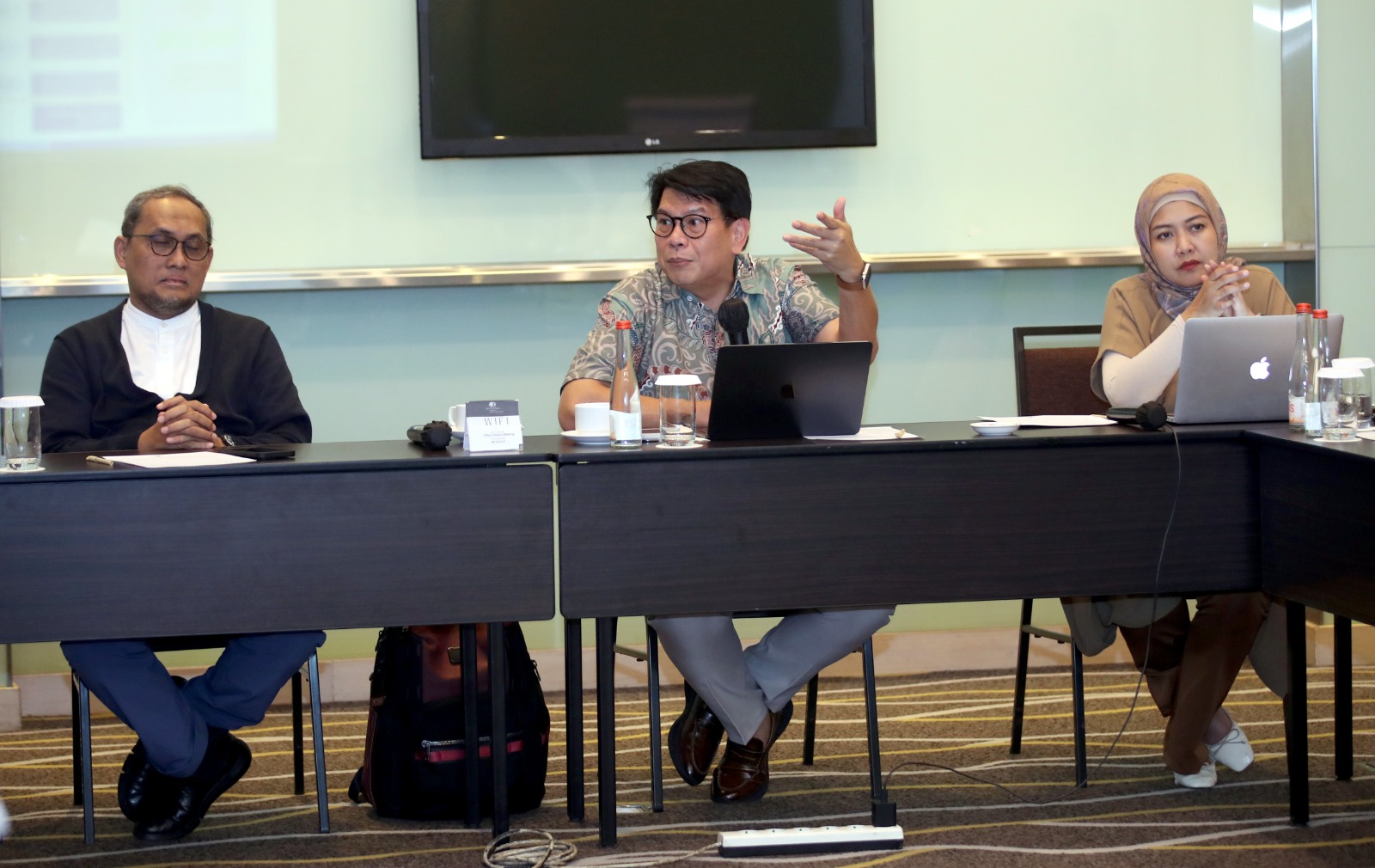
The Institute for Essential Services Reform (IESR) has said that the success of Indonesia’s 100 GW solar power programme depends not only on the target capacity but also on the government’s ability to build a foundation for rapid, measurable, and replicable implementation.
“During the initial take-off period, the government must prioritise quick-win programmes that directly reduce diesel consumption, attract investment, and improve access to clean electricity for communities,” said IESR Chief Executive Officer Fabby Tumiwa during a discussion in Jakarta on Friday (29 May).
President Prabowo Subianto has stated that the development of 100 GW of solar power plants (PLTS) can be completed before 2029, a comment made during the opening of the 48th ASEAN Summit in Cebu, Philippines, on Friday (8 May).
The PLTS 100 GW programme was first proposed by President Prabowo in June 2025, when he committed to achieving 100% renewable energy by 2035. The plan targets 80 GW of distributed solar and 20 GW of centralized solar power. IESR has identified three priority areas for the initial implementation of the PLTS 100 GW programme.
First, accelerating diesel replacement. Second, speeding up rooftop solar and Battery Energy Storage Systems (BESS). Third, developing village-level solar management models through Village and Urban Village Red-White Cooperatives (KDKMP) or Village-Owned Enterprises (BUM-Des).
“These three priorities are crucial as they demonstrate that the PLTS 100 GW programme is not merely a capacity ambition but a genuine energy system transformation strategy,” said Fabby.
According to him, diesel replacement is one of the most strategic entry points to accelerate PLTS 100 GW implementation. Indonesia still has thousands of diesel power plants, particularly in remote and island regions.
“In the RUPTL 2025-2034, PLN identified approximately 3,996 diesel generators across 1,234 remote locations and aims to reduce electricity supply from diesel power plants by 80% by 2030,” he explained.
However, Fabby noted that the procurement process for diesel replacement projects has not been optimal in recent years. Bidding efforts in 2022 saw low interest, and subsequent steps, including signing Letters of Intent (LoI) with consortia in 2023, have faced tariff approval challenges.
IESR recommends the government review the procurement mechanism for diesel replacement projects to make them more attractive to developers and better aligned with on-ground realities. Project bundling should be selectively applied, especially in regions with smaller coverage but larger project capacity.
On the other hand, village electricity programmes and the use of energy for productive economic activities are key components of the PLTS 100 GW agenda. In this context, KDKMP or BUM-Des can act as managers, asset owners, or energy service providers.
“However, not all villages have the same institutional capacity, capital, or market access. Therefore, management models must be adapted to each village’s specific conditions,” Fabby said.
IESR’s short-term recommendations for 2026–2027:
Establish a national solar task force to coordinate PLTS 100 GW implementation across ministries, PLN, local governments, and businesses.
Set a five-year implementation plan with annual targets, priority locations, funding models, procurement mechanisms, and success indicators.
Accelerate the finalisation of hybrid solar power tariffs and expand their scope to support isolated diesel power plant replacement and peak shaving programmes in large systems.
Enhance transparency in solar project procurement, including evaluating the Selected Supplier List (DPT), providing feasibility studies, and clarifying roles between PLN headquarters, PLN Indonesia Power, and PLN Nusantara Power.
Revise rooftop solar regulations to include quota exemptions for customers installing BESS and offer initial incentives to reduce BESS investment costs.
Conduct village-based feasibility studies to determine the most suitable solar business models based on KDKMP capacity, productive electricity needs, and local economic potential.
Structural transformation for 2027–2030:
Prepare and implement open bidding or competitive reverse auction mechanisms for solar projects to improve cost efficiency and transparency.
Build a centralised funding platform to support PLTS, BESS, supply chain, and maintenance investments.
Develop a national network for spare parts and maintenance services for solar power plants in strategic regions.
Expand solar workforce training, including installation, operation, maintenance, manufacturing, and BESS integration.