
100 GW Solar Power Becomes Prabowo's Grand Ambition, Can Indonesia Realise It?
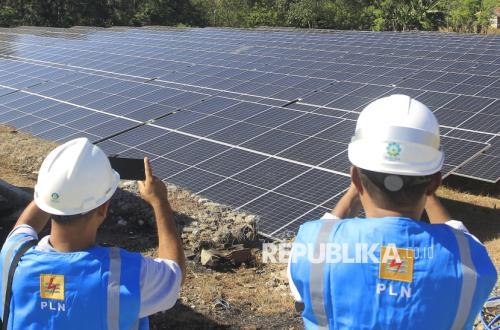
The government’s plan to accelerate the construction of solar power plants (PLTS) while simultaneously halting the operation of diesel power plants (PLTD) is considered a potential turning point towards Indonesia’s energy independence. However, this ambitious target is deemed to require serious changes in electricity governance, grid development, and financing to avoid remaining merely an ambition on paper.
The Institute for Essential Services Reform (IESR) regards the large-scale solar power development policy as one of the government’s most progressive steps in accelerating the national energy transition. Indonesia possesses abundant solar energy resources, while solar technology is relatively quick to build and its generation costs are increasingly competitive.
“We consider the announcement of the 100 GW solar power development as one of the most progressive policies in President Prabowo’s speech,” said IESR Chief Executive Officer Fabby Tumiwa in a statement confirmed in Jakarta on Saturday.
According to Fabby, positioning energy independence as a national priority sends an important signal about the direction of Indonesia’s energy policy. Moreover, dependence on fossil fuels remains a problem, particularly for remote areas whose power plants rely on diesel fuel supplies.
The target of developing up to 100 GW of solar power, he said, shows that the government is beginning to recognise the strategic position of solar energy in Indonesia’s energy system. Besides being available in nearly all regions, solar power can be developed at various scales, from large-scale plants to village-based systems.
“The plan to accelerate the retirement of diesel power plants and develop village-based solar power is also the right step to expand energy access while reducing dependence on imported fossil fuels,” Fabby stated.
The transition from diesel to solar power carries significant economic dimensions. Diesel power plants in remote areas require a continuous fuel supply, while transporting fuel to small islands and hard-to-reach areas makes electricity production increasingly expensive.
Solar power can alleviate some of these problems because its energy source is available directly on site. However, the nature of solar energy, which depends on time and weather conditions, means its development must be accompanied by energy storage systems such as batteries and an electricity grid capable of managing supply from renewable energy sources.
This transformation also has the potential to create a new economic chain. If a portion of the demand for solar panels, batteries, and supporting components can be produced domestically, the construction of solar power on a scale of tens to 100 GW could open a large market for the manufacturing industry while creating jobs in the clean energy sector.