
100,000 Baby Lobsters: Batam Police Probe International Smuggling Network
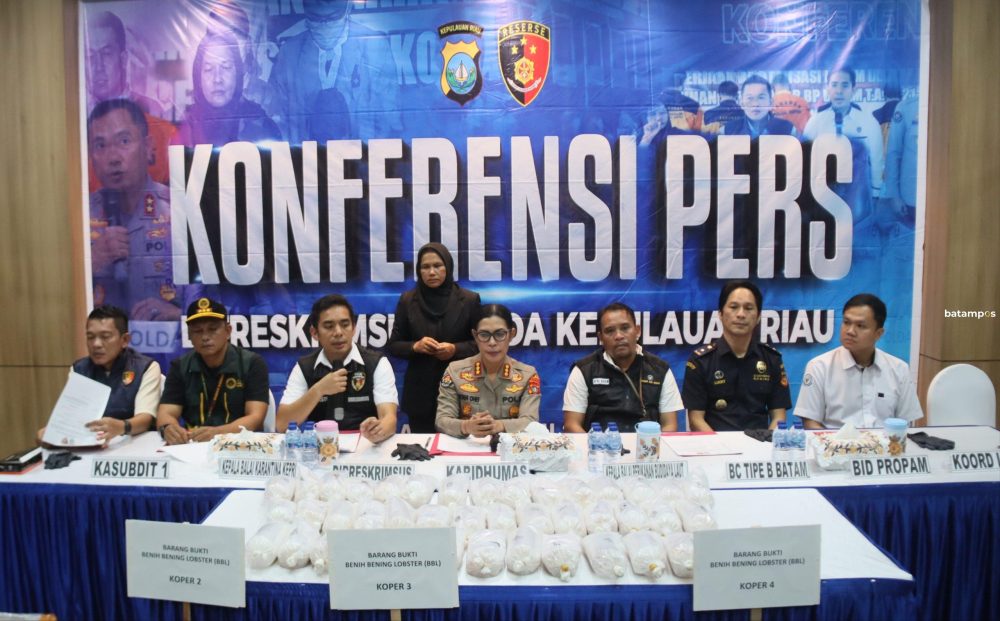
Two couriers held as Kepri police trace Rp10 billion BBL pipeline allegedly bound for Singapore.
Indonesian police in Riau Islands are expanding investigations into a foiled bid to smuggle around 100,000 baby lobsters worth an estimated Rp10 billion from Jakarta through Batam, as they work to uncover the full cross-border network behind the illegal trade.
Case Expansion And Search For Masterminds
Subdit I Indagsi investigators at the Kepri Police Special Crimes Directorate are dissecting the entire supply chain, from the origin of the lobster seed to the intended overseas recipients. Unit chief AKBP Paksi Eka Syahputra said police are still tracing who owns and ordered the baby lobsters, noting that the two suspects arrested so far appear to be low‑level couriers acting on instructions from unidentified coordinators.
Couriers’ Roles And Modus Operandi
Officers arrested two men, SS and DS, in the Mega Legenda II area of Batam Kota. SS allegedly served as a courier picking up suitcases from Hang Nadim Airport, earning about Rp2.5 million per suitcase, while DS is suspected of acting as the contact person for shipment to Singapore with a fee of around Rp10 million. The lobsters, sent from Jakarta, were hidden in seven cardboard boxes—four filled with lobster seed and three with used clothes—to camouflage the cargo and evade checks.
Airport Surveillance And Seizure In Batam
The bust followed a tip‑off about a shipment of lobster seed from Jakarta to Batam. Subdit I teams coordinated with the Animal, Fish and Plant Quarantine Agency and Batam Customs before tailing a vehicle carrying the goods from Hang Nadim Airport to Mega Legenda. A search revealed the disguised boxes, confirming that around 100,000 benih bening lobster were being prepared for onward smuggling through illegal sea routes.
Environmental Response: Lobsters Released In Rempang
To minimise ecological damage and restore stocks, Kepri Police, together with the Quarantine Office and the provincial Fisheries Service, released the seized baby lobsters back into the sea off Rempang. Authorities say international syndicates deliberately use the waters and coastal routes around Pulau Buru and nearby islands as distribution corridors, judging them easier for avoiding law‑enforcement patrols.
Legal Charges And Public Warning
SS and DS have been charged under Article 88(a) in conjunction with Article 35(1)(a) of Law No. 21/2019 on Animal, Fish and Plant Quarantine, which carries a maximum sentence of two years’ imprisonment and a fine of up to Rp2 billion. Kepri Police spokeswoman Commissioner Nona Pricillia Ohei urged the public to remain alert to narcotics and wildlife smuggling alike, warning that such crimes damage marine ecosystems and ultimately threaten local livelihoods and security.
The Batam baby‑lobster case exposes how well‑organised syndicates exploit Indonesia’s border waters and air routes to siphon off high‑value marine resources. For Indonesians and Singaporeans, robust patrols, quarantine enforcement and community reporting are crucial to breaking these supply chains, protecting lobster populations and ensuring that coastal wealth benefits legal fishers rather than offshore traffickers.
Sources: Batampos (2026) , Mediahub Polri (2026)
Keywords: Benih Bening Lobster, Polda Kepri, Smuggling Network, Mega Legenda Batam, Rempang Release