
10 Updates on Middle East War: Blockade Heats Up - Oil Prices Go Wild Again
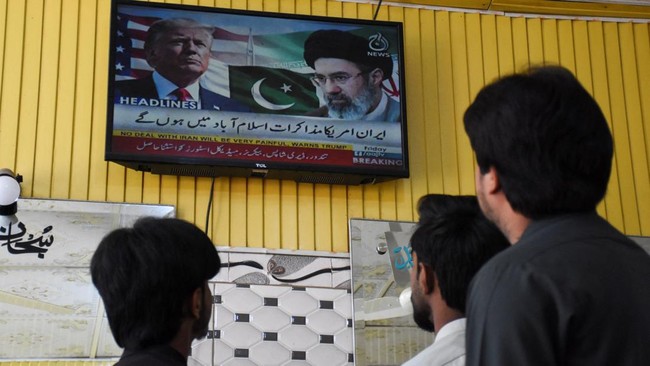
Tensions in the Middle East are rising again. This follows aggressive steps taken by the United States against Iran, sparking a surge in global oil prices and strong responses from Tehran and its allies.
Here are the latest updates on the situation in the Middle East, as reported by AFP on Monday (13/4/2026):
Trump Dismisses Negotiations with Iran
US President Donald Trump stated he does not mind if Iran does not return to the negotiating table. This comes after weekend talks in Pakistan failed to reach an agreement.
“I don’t care if they come back or not. If they don’t come back, I’m fine,” Trump told reporters at Joint Base Andrews in Maryland.
US Prepares Blockade of Iranian Ports
The US military announced it will impose a blockade on all Iranian ports starting Monday at 14:00 GMT, or 21:00 WIB. This move will effectively give the US control over maritime traffic in the Strait of Hormuz, a strategic route through which about 20% of global oil supplies pass.
“The blockade will be applied fairly to ships from all countries entering or leaving Iranian ports,” the US Central Command wrote on its official account.
However, the US military stressed it will not interfere with freedom of navigation for ships transiting the Strait of Hormuz to non-Iranian ports. This differs from Trump’s threat to close access to all ships.
In response, Iran’s Revolutionary Guard stated it has full control over the Strait of Hormuz and warned that adversaries would be caught in a “death spiral” if they make the wrong move. Iran’s Navy Chief Shahram Irani even called Trump’s threat “ridiculous and laughable,” adding that Iran’s military is continuously monitoring US troop movements.
Iran Asserts It Will Not Submit to the US
Iranian Parliament Speaker Mohammad Bagher Ghalibaf emphasised that his country will not yield to Washington’s pressure. He said they would fight back if the US attacks.
“If they fight, we will fight. We will not submit to any threats,” he said, quoted by Iranian news agency.
Oil Prices Surge
The heating situation is directly impacting the global energy market. The US benchmark oil price, West Texas Intermediate (WTI), jumped about 8% to US$104.50 per barrel, or around Rp1.78 million. Meanwhile, Brent crude for June delivery rose 7% to US$102 per barrel, or about Rp1.74 million.
Iran Claims Agreement Nearly Reached
Iranian Foreign Minister Abbas Araghchi revealed that an agreement with the US was nearly achieved during negotiations in Pakistan. However, this changed in the final moments.
“Iran engaged in good faith to end the war,” he wrote, adding that negotiations were hindered by changes in the US stance and blockade threats.
Lebanon Pushes for Israeli Withdrawal
On another front, the conflict in Lebanon continues to heat up. Lebanese Prime Minister Nawaf Salam stated his side is working to stop the war with Israel and push for troop withdrawal.
“We will continue to work to stop this war and ensure Israel’s withdrawal from all our territory,” he said.
Israel Claims Threats Reduced
Israeli Prime Minister Benjamin Netanyahu said his military has successfully suppressed the threat of invasion by Hezbollah. “The war continues, including in the security zone in Lebanon,” Netanyahu said in a video statement.
New Incident with UN Troops in Lebanon
The United Nations Interim Force in Lebanon (UNIFIL) reported an incident where an Israeli tank twice rammed a peacekeeping vehicle in southern Lebanon. Additionally, access to UNIFIL positions was reportedly blocked by Israeli soldiers.
War Casualties Continue to Rise
Official Lebanese media reported that Israeli strikes have expanded in the southern region. The local Health Ministry recorded at least five people killed in the latest attacks, bringing the total death toll on that front to 2,055.
Israel emphasised that the ceasefire in force in the Middle East region does not cover its operations against Hezbollah in Lebanon.
Allies Refuse to Help Trump
Several US allies have rejected the Strait of Hormuz blockade. For instance, the UK stated it will not join Trump’s plan amid escalating US-Iran tensions.
“We will continue to support freedom of navigation and the openness of the Strait of Hormuz, which is essential for global economic stability and domestic cost of living,” a UK government spokesperson said.
Nevertheless, London also stressed that the Strait of Hormuz should not be subject to unilateral tolls. Previously, Iran proposed charging US$2 million per ship.
Spain made similar comments. Trump’s announced naval blockade of the Strait of Hormuz was called “nonsense.”
“I also think it’s something nonsensical… This is another episode in the downward spiral we’ve been experiencing,” Spanish Defence Minister Margarita Robles said in an interview on Spanish public television, as reported by AFP.
Meanwhile, Turkey called for the Strait of Hormuz to be opened “as soon as possible.” Negotiations with Iran must be held.
“Persuasion methods must be used, and the strait must be opened as soon as possible,” Turkish Foreign Minister Hakan Fidan told the official Anadolu news agency.