
10 Ton of Plecostomus Fish Captured in Jakarta, This is How They Are Destroyed
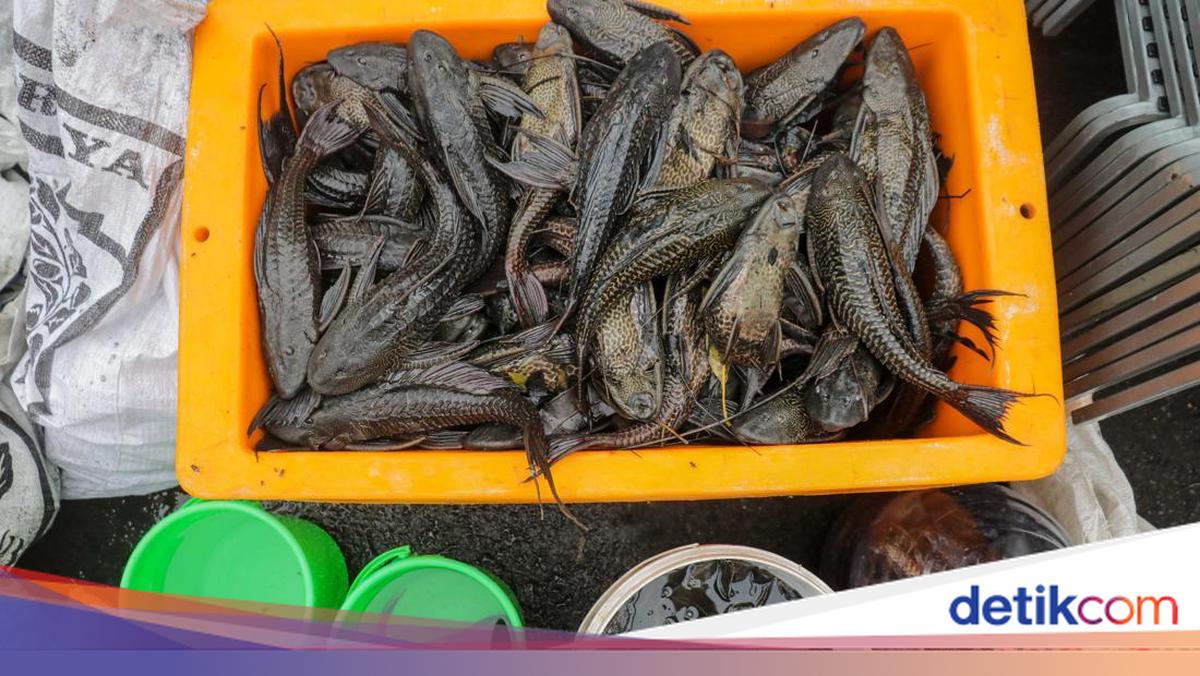
The Jakarta Food Security, Maritime, and Agriculture Agency (KPKP) has revealed that a total of 10.189 tonnes of plecostomus fish have been captured. This amount is an accumulation from the five municipalities in the Province of Jakarta.
“Up to now, the total accumulation of plecostomus fish successfully captured from all waterways in DKI Jakarta has reached 10.189 tonnes,” said the Head of the DKI Jakarta KPKP, Hasudungan Sidabalok, when contacted on Thursday (23/4/2026).
This amount represents the results of a simultaneous capture on 17 April. Additionally, the East Jakarta City Government conducted another capture on 20 April, and the South Jakarta City Government on 21 April.
Hasudungan stated that the KPKP has prepared a safe standard operating procedure for handling plecostomus fish to avoid environmental contamination. The captured fish, he said, will be ensured to be dead before being buried.
“For destruction, the plecostomus fish must be ensured dead by splitting or breaking their spines, then placed into tightly sealed sacks for transport and burial at designated locations,” he explained.
Proposal to Turn Plecostomus Fish into Charcoal
Deputy Governor of DKI Jakarta, Rano Karno, revealed a proposal regarding the utilisation of plecostomus fish, which are currently being eradicated. Rano said that in Brazil, plecostomus fish are turned into charcoal.
“There is a temporary proposal; this has been done by Brazil. It turns out that plecostomus fish also became a problem in Brazil, but it can become another component. It can even be turned into charcoal,” said Rano at Jakarta City Hall on Tuesday (21/4).
Rano was once surprised by the amount of plecostomus fish captured in previous operations, reaching tonnes. This prompted the Provincial Government to seek more comprehensive handling solutions.
He emphasised that the plecostomus fish handling programme will continue because it is deemed important to address various environmental problems in Jakarta.
Rano responded to criticism from the Indonesian Ulema Council (MUI) regarding the burial of live plecostomus fish. He said the MUI’s spotlight serves as evaluation material.
“Indeed, yesterday the burial was such that many were not dead and so on. For that, perhaps we will fix it later,” he said.
According to Rano, in the future, plecostomus fish handling will be carried out with better procedures, including ensuring the fish are dead before further handling.
“It will definitely be that they must be killed first,” he stated.