
10 Provinces Leading Indonesia's Layer Chicken Industry: Who Competes with East Java?
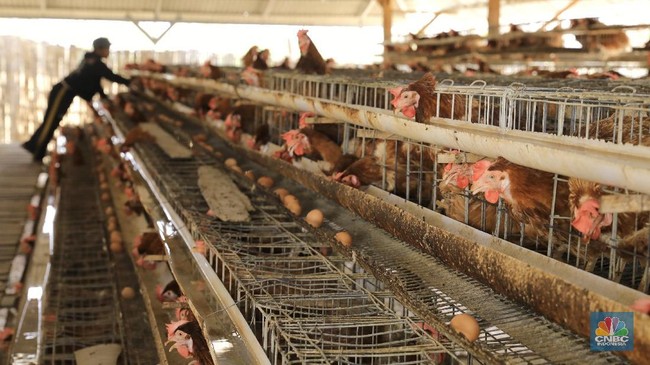
Layer chickens serve as one of the primary pillars of the chicken egg supply in Indonesia. While the population is spread across various regions, it remains concentrated in several key production provinces.
According to data from the Central Bureau of Statistics (BPS), East Java is the province with the largest layer chicken population in 2025, reaching 136.91 million birds. It is followed by Central Java with 54.82 million birds and West Java with 48.21 million birds.
Meanwhile, North Sumatra has emerged as one of the main production centres outside Java, with a layer chicken population of 39.49 million birds.
The dominance of East Java is quite striking. With a population exceeding 100 million birds, this province is one of the most critical regions in supporting the national layer egg industry.
Indonesia’s Layer Chicken Population Rises
Nationally, the layer chicken population stood at 3-86.13 million birds in 2021. After a temporary decline in 2022, numbers have increased in the following years.
In 2023, the national layer chicken population reached 410.17 million birds, and continued to grow until reaching 426.12 million birds in 2025.
This population increase is occurring alongside rising egg demand, which has been further bolstered by the Free Nutritious Meal (MBG) Programme. The Ministry of Agriculture estimates that the requirement for layer eggs for the MBG in 2025 will reach 115,528 tonnes, in addition to the regular demand of approximately 6.36 million tonnes.
This additional requirement makes eggs one of the key commodities being monitored to strengthen the supply for the MBG programme. The government is also encouraging increased egg usage within the MBG menus and the absorption of produce from local farmers.
However, the increase in the layer chicken population cannot be attributed entirely to the MBG programme. The population trend was already on the rise before the programme was widely implemented. The MBG is more accurately viewed as an additional demand factor that increases the need for production capacity and egg supply.