
10 Oldest Indonesian Brands Still Surviving Today, One Aged 144 Years
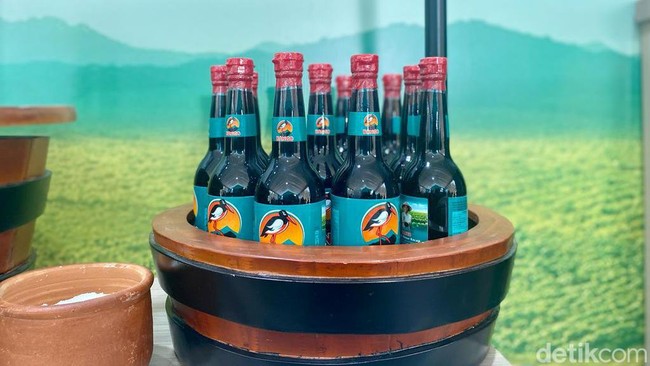
A number of brands that are still easily found in Indonesia have in fact been through a long journey. Some of them have been present since the Dutch East Indies era and have survived for more than a century.
As Indonesia marks 81 years of independence today, these brands continue to accompany and serve as mainstays for the public.
Interestingly, these brands emerged from various types of businesses, ranging from soy sauce, cigarettes, herbal medicine, milk, coffee, to beverages. Some started as home businesses, while others were brought in from abroad and later became part of Indonesian society’s daily life.
Here are the 10 oldest brands still surviving in Indonesia:
- Kecap Cap Istana - 1882
One of the oldest brands in Indonesia turns out to come from the soy sauce industry in Tangerang. Citing the Budaya Indonesia website, the soy sauce is known as Kecap Cap Istana, which has a long history dating back to 1882, making it 144 years old.
The factory was founded by Teng Hay Soey, a merchant of Chinese descent who lived around Pasar Lama, Tangerang. The business was later continued by Teng Giok Seng and is still operating today.
The soy sauce produced is known as Kecap Benteng, referring to the Tangerang area which was formerly known as a fortress city. Local historical sources record that the factory has been established since 1882 and is still operating to this day.
Kecap Cap Istana is even cited as the oldest soy sauce brand in Indonesia. Besides Cap Istana, the same product is also known using a bird label or Kecap Benteng Tulen.
Until now, the production process still maintains the old methods. Production is carried out using human labour and does not fully rely on machines.
- Djie Sam Soe - 1913
Long after the Tangerang soy sauce industry developed, a cigarette brand emerged that later became one of Indonesia’s legendary products. In the book The Sampoerna Legacy (2017), in 1913 Liem Seeng Tee founded a small business named Handel Maatschappij Liem Seeng Tee. The initial product name was Dji Sam Soe.
Today that small business is called Sampoerna. Dji Sam Soe was taken from the pronunciation of the numbers 2, 3, and 4 in Chinese. The cigarette quickly gained market acceptance. High demand even led the company to employ thousands of people to roll cigarettes.
Its peak came in 1940. At that time, production reached around 3 million cigarettes per week. Djie Sam Soe then became one of the cigarette brands able to survive through various eras and remains known to this day.
- Jamu Jago - 1918
The year 1918 marked the beginning of one of the oldest herbal medicine brands in Indonesia, Jamu Jago. This brand was pioneered by T.K. Suprana. Initially, the herbal medicine was made traditionally and only sold around the place of business.
From that simple enterprise, Jamu Jago later grew. Products originally sold in the Wonogiri area expanded to Solo and various regions in Java. By 1936, Jamu Jago’s marketing had developed to various parts of the archipelago.
The company was later continued by the next generation. In 1945, its centre of operations was moved to Semarang. More than a century later, Jamu Jago still survives and produces various herbal medicine products. Several sources cite 1918 as the initial year of this brand’s existence.
- Njonja Meneer - 1919
A year after Jamu Jago, another herbal medicine brand emerged that would later become one of the most famous names in the history of Indonesia’s herbal medicine industry, Njonja Meneer.
This brand is associated with Lauw Ping Nio, a woman later known as Njonja Meneer. The name Meneer itself is linked to the story of her mother consuming broken rice grains when pregnant with her.
Lauw Ping Nio married young to a trader named Ong Bian Wan. From Semarang, she then began developing a herbal medicine business. In 1919, Lauw Ping Nio ventured to produce herbal medicine simply with still very manual technology. Production was carried out to meet public demand.
Her herbal medicine later became increasingly well known. She even travelled by horse-drawn cart from one area to another to seek raw materials and markets. Products produced included Djamu Habis Bersalin, Jamu Sakit Kencing, Jamu Galian Rapet, Jamu Mekar Sari, Jamu Pria Sehat, and Jamu Gadis Remaja.
Her products were known as jamu cap potret Njonja Meneer. In 1940, marketing of the herbal medicine expanded to Jakarta. Her daughter, Ong Djian Nio alias Nonnie Saerang, moved to Jakarta and opened an outlet in Pasar Baru.
After World War II, the business grew again. In a 1949 report by the Semarang newspaper De Locomotief, Njonja Meneer was mentioned as appearing at a night market and selling various herbal products. The name Njonja Meneer even earned the nickname “Ratu Jamu” because her products were used by various groups in society.
- Frisian Flag - 1922
The next brand has a slightly different history. Quoting from its official website, Frisian Flag did not begin from a factory in Indonesia, but from milk products first imported to the Dutch East Indies.
In 1922, products under the Frische Vlag brand began to be imported to Indonesia from Cooperative Condens Fabriek in the Netherlands. Since then, the brand developed and later became widely known as Frisian Flag. The company itself cites 1922 as the beginning of its journey in Indonesia.
Further development occurred decades later. In 1969, construction of a factory in Pasar Rebo, Jakarta, began. Two years later, precisely in 1971, sweetened condensed milk began to be produced and distributed through that factory. From a product originally brought in from the Netherlands, Frisian Flag later developed into one of the milk brands close to the lives of Indonesian families.