
10 Muharram Dialogue: NU Figures, Academics, and IJABI Call for Preserving Ukhuwah and Social Harmony in West Java
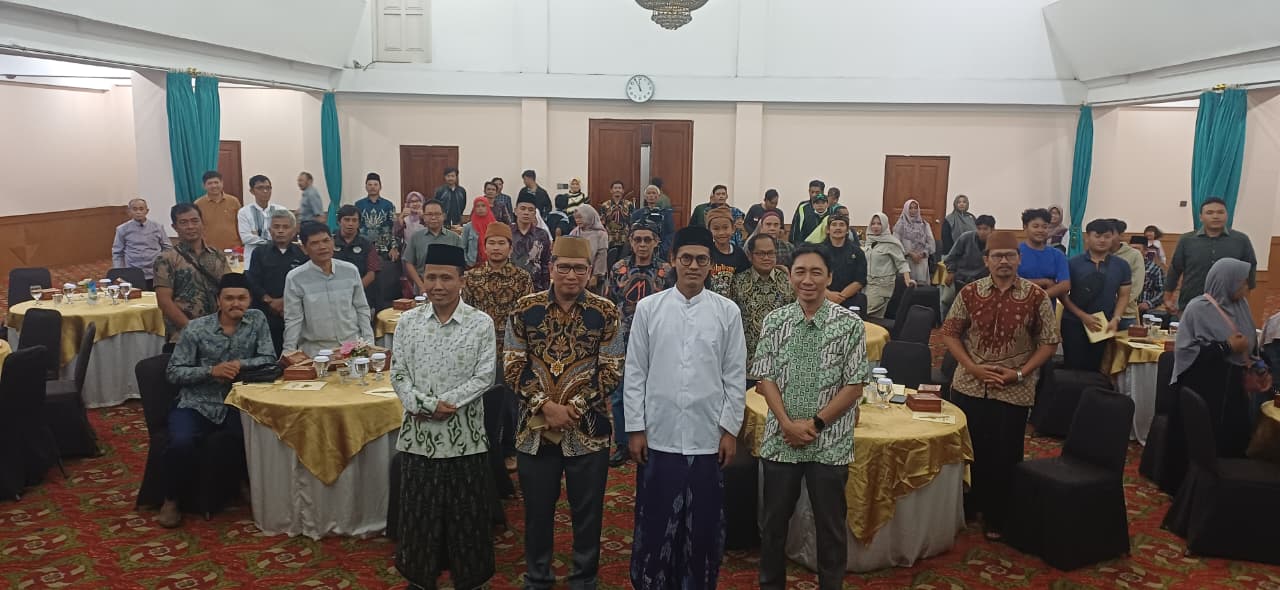
A national discussion and gathering ahead of 10 Muharram, themed “Strengthening Islamic Brotherhood, Emulating the Values of Sacrifice, and Maintaining Social Harmony in West Java,” was held at Hotel Puri Khatulistiwa in Sumedang on Sunday, 14 June 2026. The event featured three speakers: Dr. KH. Ramdan Fawzi, M.Ag., a lecturer at UNISBA’s Faculty of Sharia; KH. Ahmad Dasuki, S.IP., M.M., Deputy Chair of PWNU West Java; and K.H. Miftah Fauzi Rakhmat, Lc., M.A., Chair of the IJABI Syura Council.
The forum served as a dialogue space to explore the meaning of 10 Muharram from the perspectives of Islamic brotherhood, the value of sacrifice, and social harmony. The discussion emphasised that the commemoration of 10 Muharram should not become a platform to sharpen historical differences, but rather a momentum to extract moral values, strengthen fraternity, and build a more serene religious life.
In his presentation, Dr. KH. Ramdan Fawzi asserted that difference is an inevitability in human life. He argued that the broader a person’s knowledge, the greater their capacity to accept differences. He stressed that the primary lesson from the tragedy of Karbala is not to harbour resentment towards historical figures, but to combat the evil traits that persist today, such as tyranny, greed, oppression, and provocations that divide the community. He also highlighted the importance of hifdzul ummah, safeguarding the unity of the people, as part of religious responsibility. In the context of West Java, this value can be reinforced through the local Sundanese wisdom of silih asah, silih asih, silih asuh (mutual learning, mutual love, and mutual care).
Meanwhile, KH. Ahmad Dasuki elaborated on the importance of a moderate thinking tradition in nurturing brotherhood. He outlined five principles of Nahdlatul Ulama thought: tawasuth (moderation), tasamuh (tolerance), islahiyyah (a spirit of reform), tathawwuriyah (dynamism), and manhajiyah (practising religion with a methodology). He stressed that Muslims need to increase their intellectual journeys to understand the viewpoints of other groups. According to him, peaceful coexistence does not mean dissolving one’s identity, but rather respecting one another and living side by side maturely.
K.H. Miftah Fauzi Rakhmat invited participants to view 10 Muharram as a space for reflection to expand love, sacrifice, and social benefit. He connected the values of Muharram with the lessons of the Madinah Charter, namely the importance of upholding mutual agreements and not disturbing established community traditions as long as they do not contradict the public good. He also emphasised that the spirit of love for the Ahlul Bait and the commemoration of 10 Muharram should be expressed in a soothing manner, bringing benefit and not causing social unrest. He urged the community to make the value of sacrifice not merely a historical memory, but a real action to bring about public welfare.
During the discussion session, the speakers highlighted the importance of inter-Islamic group dialogue, strengthening religious literacy, and the need for restraint from religious expressions that could be misunderstood at the grassroots level. The forum also encouraged that differences in schools of thought and traditions should not be made a source of conflict, but rather understood as the intellectual wealth of the Muslim community. Through this activity, participants were invited to make the momentum of 10 Muharram a meeting point: to nurture brotherhood, emulate sacrifice, strengthen social harmony, and expand benefits for the people, the nation, and the society of West Java. The organisers hope the results of this discussion will not stop as a forum discourse, but can be disseminated through social media, digital channels, and concrete social activities, so that the message of ukhuwah and harmony can reach a wider community.