
10 Million Barrels of Oil Lost in a Single Day, a New Record in the Energy Crisis
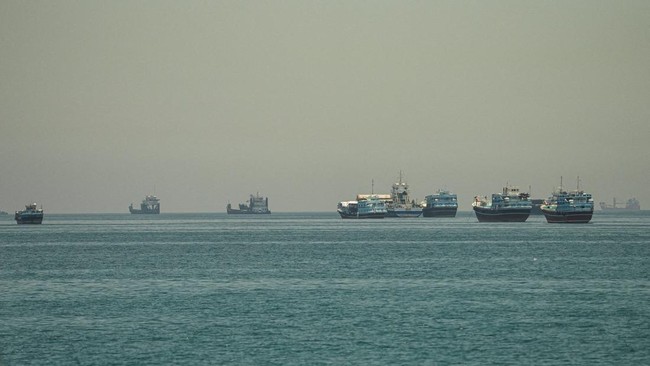
The disruption to world oil supply reached an unprecedented level in March 2026. The closure of the Strait of Hormuz removed around 10.1 million barrels of oil per day from the global market. That figure represents the largest oil supply disruption ever recorded, according to International Energy Agency (IEA) data cited in the World Bank Commodity Markets Outlook.
The scale of the impact far exceeds the major energy crises of the past five decades. The Iranian Revolution of 1978-1979, which had long served as the benchmark for the largest supply disruption, reduced world oil production by around 5.6 million barrels per day. In other words, the disruption in the Strait of Hormuz in March 2026 was larger by about 4.5 million barrels per day, or nearly 80%.
The Strait of Hormuz holds a critical position in the global energy system. The narrow sea lane connecting the Persian Gulf to the Arabian Sea is the main export gateway for oil from Saudi Arabia, Iraq, the United Arab Emirates, Kuwait, Qatar and Iran. Around 20% of world oil trade passes through the strait, so any disruption to shipping directly hits global supply.
Citing the World Bank Commodity Markets Outlook, which draws on IEA data, the drop in supply occurred after tanker traffic in the Strait of Hormuz nearly came to a halt due to escalating conflict in the region. The reduced shipping activity led several Gulf producer countries to cut production because of limited export routes. As long as shipping obstacles persist, the risk to world oil supply remains high.
Before this event, the Iranian Revolution was the largest supply disruption in modern history. Iranian oil production fell sharply from November 1978 to April 1979, removing around 5.6 million barrels per day from the international market. That crisis was one of the causes of the surge in global oil prices at the end of the 1970s.
The Arab oil embargo of 1973 was also an important milestone in world energy history. Member countries of the Organisation of Arab Petroleum Exporting Countries (OAPEC) restricted oil exports to a number of Western countries. Global supply fell by around 4.3 million barrels per day between October 1973 and March 1974. The crisis pushed oil prices up nearly fourfold and triggered energy-saving policies in various countries. The event later became one of the reasons for the establishment of the International Energy Agency (IEA).
A disruption of similar scale occurred again when Iraq invaded Kuwait in August 1990. Production from the two major producer countries in the Persian Gulf was disrupted, reducing world oil supply by around 4.3 million barrels per day. International oil prices surged sharply within days as the market anticipated a supply shortage.
The Iran-Iraq War in the early 1980s also placed heavy pressure on energy markets. The conflict reduced supply by around 4.1 million barrels per day between October 1980 and January 1981.
Entering the 2000s, the scale of supply disruptions tended to be smaller than the crises of previous decades. The United States invasion of Iraq in 2003 cut supply by around 2.3 million barrels per day. Meanwhile, the civil war in Libya in 2011 removed around 1.5 million barrels per day from the global market.
IEA data show that five of the seven largest supply disruptions in history originated in the Middle East. The concentration of world oil production in that region means geopolitical conflict has a direct impact on the global supply balance. The closure of the Strait of Hormuz in 2026 became the first event to push supply losses beyond 10 million barrels per day, setting a new record in the history of the world oil market.
Source: jawawa.id (https://jawawa.id/newsitem/10-million-barrels-of-oil-lost-in-a-single-day-a-new-record-in-the-energy-crisis-1786859467)
Originally published by CNBC Indonesia (https://www.cnbcindonesia.com/research/20260816072710-128-759745/10-juta-barel-minyak-hilang-dalam-sehari-rekor-baru-krisis-energi), translated from Indonesian