
10 Global Institutions Forecast Silver Prices, Is Its Future Really Gloomy?
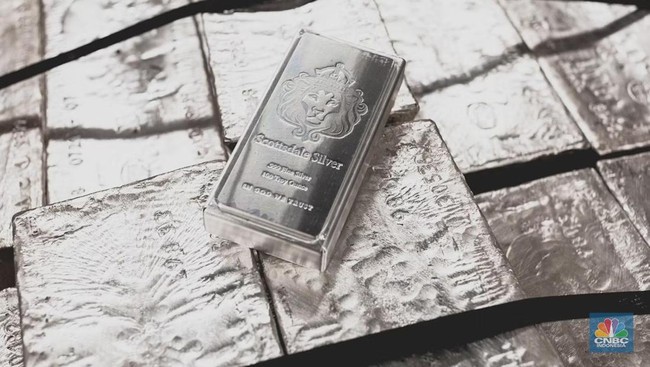
Global silver prices have come under renewed pressure this year. The price of silver has fallen 19% year-to-date, whilst its value has slumped 38.5% since the Iran-Israel war erupted at the end of February 2026. The pressure on the silver market emerged after the conflict between the United States (US) and Iran intensified from late February 2026. This conflict triggered a rise in oil prices, which has the potential to stoke inflation. The increase in energy prices has fuelled concerns that inflation will become stubborn once again. Market participants are now beginning to estimate that the US central bank still has room to raise interest rates one more time before the end of the year. For silver, the prospect of higher interest rates is a negative sentiment. Precious metals like silver do not offer returns in the form of interest or coupons. When borrowing costs rise and bond yields increase, investors tend to shift funds to instruments that offer more attractive returns. The US dollar index has also strengthened, making commodities traded in dollar denominations, including silver, more expensive for buyers outside the US. This condition reduces buying interest and amplifies price pressure. Silver prices had hit an all-time record high of US$121.64 per troy ounce on 30 January 2026. Since that peak, the price has been slashed by more than half. Profit-taking, a strengthening US dollar, and changing interest rate expectations have been the three factors altering the direction of the precious metals market in recent months. If inflation heats up again and the likelihood of an interest rate hike grows, the room for a short-term recovery in silver still appears limited. Silver is expected to continue facing pressure until the end of 2026, and this could even extend into 2027. The Iran conflict, the closure of the Strait of Hormuz, high interest rates, and concerns over an economic slowdown are worsening the short-term outlook for the precious metal. Analysts assess that investors should not expect silver prices to return to the January highs unless a strong new catalyst emerges. Unlike gold, which is viewed more as a safe-haven asset, over 50% of silver consumption comes from the industrial sector. Consequently, a global economic slowdown and weakening manufacturing activity directly suppress demand for silver. The Middle East conflict has also increased uncertainty, leading companies to reduce investment and production. Despite the weak short-term outlook, most analysts remain optimistic about silver in the long term. Reasons include the global silver supply experiencing a deficit over the past several years, mining production being unable to keep pace with demand growth, high industrial needs for green energy, especially solar panels, and the potential for investment to increase again when economic conditions improve. Nicky Shiels, Head of Research and Strategy at MKS PAMP, said that although the long-term prospects for silver remain positive, the short-term outlook still tends to be bearish. ‘Silver, as a precious metal with high-beta characteristics, sits between two roles: as a monetary/investment asset and as an industrial commodity,’ Shiels stated. If gold manages to set a new price record, silver is expected to follow the rally. According to analysts, the price of silver even has the potential to return to the January highs, but the main condition is that gold must strengthen first. Ole Hansen, Head of Commodity Strategy at Saxo Bank, said that current market conditions are no longer very supportive of silver price movements. Therefore, silver needs a new catalyst to be able to return to the highs reached in January. ‘Historically, the price of silver is already relatively expensive compared to gold. However, that does not mean the price of silver cannot rise further,’ he said. He added that silver needs a new catalyst, such as increased industrial demand, tighter physical supply, or a resurgence of speculative investor interest, to significantly outperform gold. The price of gold itself has fallen sharply since January due to a stronger US dollar, expectations of higher-for-longer interest rates, and a shift of investor funds into bonds, technology stocks, and artificial intelligence. deVere Group CEO Nigel Green estimates that once the Iran conflict subsides, gold has the potential to strengthen to US$5,500 per troy ounce within 12 months. Such a gold rally could be a major catalyst for a rise in silver prices. BlackRock analysts assessed that silver’s more volatile characteristics compared to gold mean its allocation in investment portfolios is usually smaller. However, silver still plays an important role in enhancing investment diversification. ‘Silver has higher volatility and its price movements are more cyclical than gold. Although it does not always provide the same benefits as gold, silver can improve portfolio diversification throughout market cycles by offering greater upside potential when the economy grows, reflation occurs, and industrial activity increases,’ BlackRock analysts stated. Due to its higher volatility, the investment allocation for silver in a portfolio is generally smaller than that for gold. Projections from major financial institutions regarding the silver price are relatively cautious. UBS cut its year-end silver price target for 2026 to US$80 per troy ounce from US$85 previously, due to weakening industrial demand. HSBC estimates the average silver price this year at US$75, falling to US$68 in 2027. Commerzbank also projects the silver price to be around US$80 by year-end. Bank of America assesses that silver could still return to US$100 if gold rallies, but such an increase is not expected to be sustained.