
10 Expert Recommendations to Develop Indonesia's Gold Downstream Industry
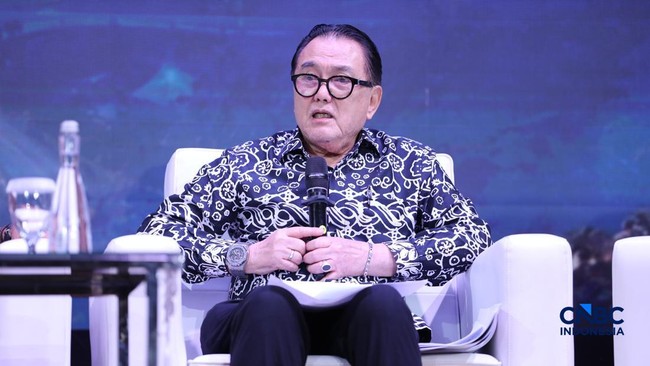
Chairman of Indonesia Mining (IMI) Irwandy Arif has presented various recommendations to stakeholders so that gold is not merely viewed as a commodity to be bought and sold. The series of suggestions aims to develop the gold industry in Indonesia. “I have actually prepared for this, that gold should not be seen just as something we buy and sell. So, not just production. This is what the government must do,” he said during the Mindialogue 2026 event on Wednesday (12/8/2026). The first recommendation is to integrate gold resources, reserves, and mining. According to him, reserves are the lifeblood of a mining company. “Without reserves, do not claim to be a mining company. You become a trading company,” Irwandy stated. Secondly, there is a need for standardisation and quality improvement of gold refineries in Indonesia. He noted that standardisation has already been carried out by ANTAM through London Bullion Market Association (LBMA) certification. Thirdly, gold assets should not only be prepared for trading. In other words, gold can function as a financial instrument. “There has been a shift from buying jewellery to buying bullion and using it as a hedge in banks,” Irwandy explained. As a financial instrument, gold can be stored or used for gold-based financing. Gold can also function as an investment, gold financing, or a gold sovereign wealth fund. The next suggestion is that Indonesia needs to develop its jewellery industry. Currently, Indonesia even has a ban on exporting jewellery. “As a result, people find loopholes, making very large bundled gold necklaces so they can export. That is what is happening now,” he clarified. Furthermore, there is a need to regulate gold reserves at Bank Indonesia. According to Irwandy, this regulation could be made by adjusting to the country’s financial conditions. The sixth suggestion is to pay attention to the country’s rating without stifling investment. This is to ensure investment development occurs in Indonesia. Next is the reform of community mining, as initiated by MIND ID. The existence of community mining reform can increase gold production. He revealed that Indonesia currently produces up to 100 tonnes of gold per year from unlicensed mining activities (PETI). If this reform is implemented, Indonesia will produce approximately 120 tonnes of gold per year. “If this happens, it will be extraordinary. Revenue for the state. The detailed concept has been compiled in two FGDs,” he said. The following recommendation is to separate legal and illegal gold. In this regard, Indonesia needs to prepare a gold traceability system. The implementation of Environmental, Social, and Governance (ESG) standards in mining activities also needs to be carried out. Then, there is a need for policies that facilitate the gold industry. The final suggestion is the establishment of schools around gold mining areas. He explained that such efforts are being made by PT Freeport Indonesia through the Nemangkawi Mining Institute (IPN). However, IPN aims to train operators and does not concentrate on gold-specific schools. “If these 10 or 11 steps can be implemented, our gold industry will be able to fly the red and white flag there,” Irwandy asserted.