
10 countries with the largest forest area in the world, Indonesia number 8
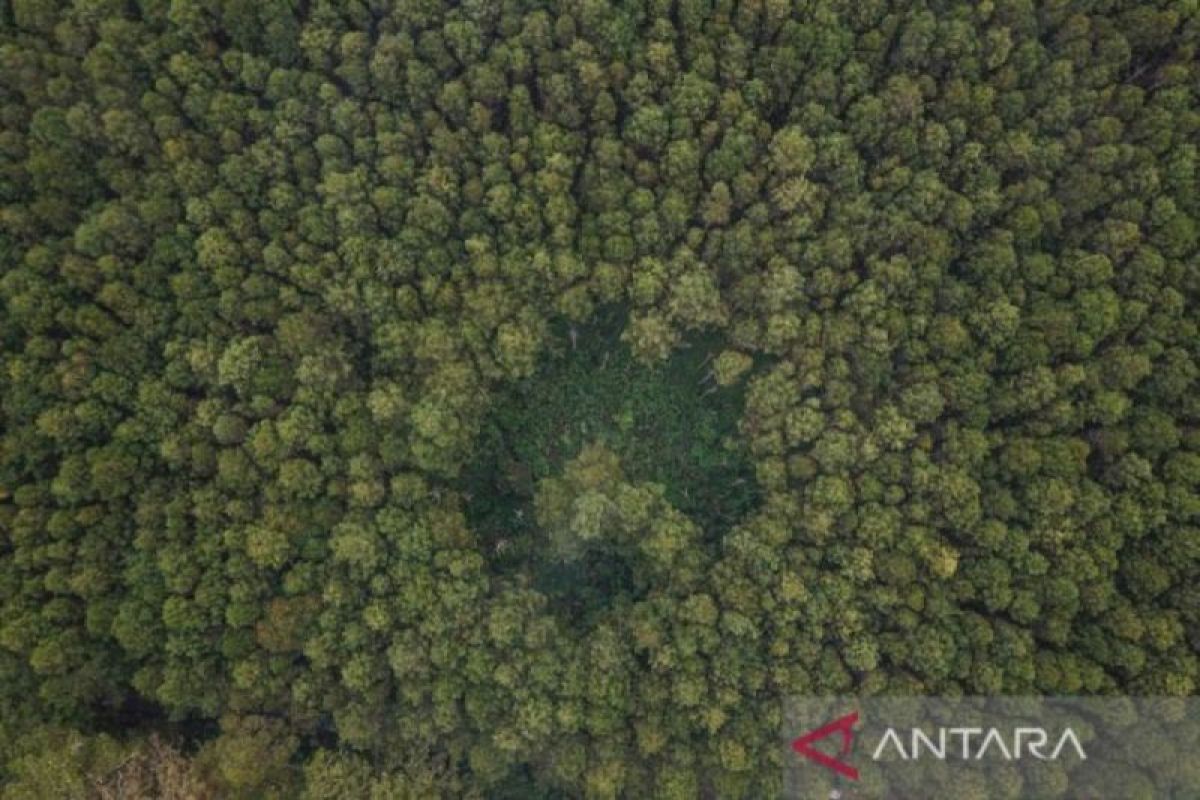
Indonesia is ranked eighth in the list of countries with the largest forest area in the world, based on the Global Forest Resources Assessment (FRA) 2025 published by the Food and Agriculture Organization (FAO). The FAO recorded that the world’s forest area in 2025 reached around 4.14 billion hectares, or about one third of the Earth’s total land area. More than half of the world’s forest area is concentrated in five countries: Russia, Brazil, Canada, the United States and China.
Russia is the country with the largest forest area in the world, at around 832.63 million hectares, equivalent to about 20.1 percent of the world’s total forests. Russia’s forest areas are largely boreal forests stretching across Siberia. Brazil is in second place with a forest area of around 486.09 million hectares, or about 11.7 percent of the world’s forests. Most of this area is in the Amazon, one of the world’s largest tropical forest ecosystems. FRA 2025 data shows that around 97 percent of Brazil’s forests are in the tropical climate domain.
Canada ranks third with a forest area of around 368.82 million hectares. Forests cover around 41 percent of Canada’s land area. The country also has a substantial primary forest area, with around 54 percent of its total forests categorised as primary forest in FRA 2025 data. The United States is in fourth place with a forest area of around 308.90 million hectares. Its forests are spread across various regions with different ecosystem characteristics. FRA 2025 data records that forests cover around 34 percent of the United States’ land area.
China is in fifth place with a forest area of around 227.15 million hectares. FRA 2025 data shows that China’s forest area has increased in recent decades. In 1990, the forest area was recorded at around 157.14 million hectares, and by 2025 it reached around 227.15 million hectares. China’s forests now cover around 24 percent of its land area.
The Democratic Republic of the Congo, or DR Congo, is in sixth place with a forest area of around 139.19 million hectares. The Central African country is one of the world’s important tropical forest centres. Its forest area is part of the Congo Basin, which is known for its high biodiversity.
Australia is in seventh place with a forest area of around 133.56 million hectares. Although much of Australia is dominated by dry areas, the country still has extensive and diverse forest areas, including eucalyptus forests as well as a number of tropical and subtropical forest ecosystems.
Indonesia is in eighth place with a forest area of around 95.97 million hectares. FRA 2025 data records Indonesia’s forest area at 95,969.3 thousand hectares, or around 95.97 million hectares. This figure is equivalent to around 2.3 percent of the world’s total forest area. Indonesia’s forests cover around 51 percent of its land area. Of the total forest area, around 49 percent is categorised as primary forest. Indonesia’s data in FRA 2025 also uses the definition of forest as an area of more than 6.25 hectares, with trees that can reach a minimum height of five metres and canopy cover of more than 30 percent.
India is in ninth place with a forest area of around 72.74 million hectares. India’s forest areas are spread across various regions with diverse geographical and climatic conditions, ranging from mountainous areas to tropical forests. Peru is in tenth place with a forest area of around 67.16 million hectares. Most of Peru’s forests are in the Amazon. This position makes Peru, together with Brazil and other South American countries, an important area for the world’s tropical forests.
Indonesia’s position in the list shows the size of the forest area the country possesses. With around 95.97 million hectares, Indonesia is the only Southeast Asian country in the top ten countries with the largest forest area in the world. If the five countries with the largest forests, namely Russia, Brazil, Canada, the United States and China, are combined, their forest area reaches around 54 percent of the world’s total forests. Meanwhile, the top ten countries account for around 66 percent of the entire global forest area.
The FAO recorded that the world’s forest area reached 4.14 billion hectares in 2025. Although the rate of global deforestation has shown a slowdown in the last decade, the world’s forests still face various pressures. The size of these forest areas also means these countries have an important role in maintaining biodiversity, storing carbon and preserving ecosystem functions. Therefore, forest area is not only a measure of natural resource wealth, but is also related to the responsibility for its management and protection.