
10 Cities Set to Disappear from Maps – Jakarta Among Them?
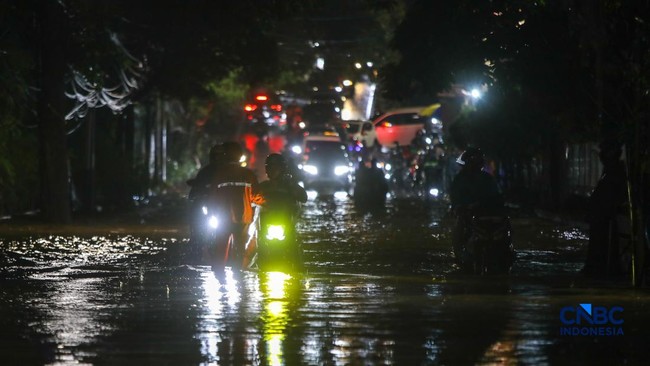
Jakarta, CNBC Indonesia — Jakarta is predicted to sink and disappear in the future due to climate change. This is triggered by melting polar ice causing significant sea level rises worldwide.
NASA has estimated that sea levels could rise by 3 to 6 feet by 2100. If this occurs, hundreds of millions worldwide could lose their homes to flooding.
According to Sciencing, densely populated coastal areas are already at risk of being submerged. Additionally, flooding, a common issue, is now reported occurring far more frequently than before.
In early March 2025 alone, floods had inundated parts of Jabodetabek and Java, with Bekasi recording its worst flooding since 2016 and 2020.
‘Jakarta is known as one of the world’s fastest-sinking cities. The problem has become so severe that the Indonesian government has opted to relocate the capital to the new IKN,’ Sciencing reported last year.
Sciencing reported Jakarta is sinking at 17cm per year. Geographically, it lies on low-lying land previously dominated by swamps.
Thirteen rivers flow through the city to the Java Sea, making the entire area highly vulnerable to rising water levels. Jakarta has also seen increasing floods since the turn of the century.
The worst floods occurred in 2007, claiming 80 lives and causing hundreds of millions in damages.
Sciencing also noted the government’s 2022 decision to move the capital from Jakarta to IKN, citing high flood risks, along with widespread pollution and congestion, as reasons for the relocation.
‘The new capital, IKN, is predicted to be fully completed by 2045. By then, it may serve as a refuge from sinking Jakarta,’ Sciencing stated.
Other major cities projected to disappear include:
Alexandria, Egypt
The second-largest city in Egypt, with an estimated 5.7 million residents in 2024, is a key hub for transcontinental trade, especially oil shipping. It serves as a terminal for the SUMED Pipeline, which transports crude oil and natural gas from the Arabian Peninsula to Europe via the Red Sea and Mediterranean. However, the negative impact of fossil fuel use is melting glaciers. The UN climate panel predicts 30% of the city could be submerged by 2050, displacing at least 1.5 million people. Flooding could also spread across much of the Nile Delta, destroying one of civilisation’s birthplaces.
Miami, Florida
Miami is estimated to have a population of 460,000 in 2024. The Miami-Fort Lauderdale metropolitan area is the third-largest urban region in the US after New York, Los Angeles, and Chicago. Over half of Miami-Dade County sits just six feet above sea level, with 60% at risk of submersion by 2060. The situation is worsened by luxury coastal developments, with Sciencing warning that Miami’s submersion could be the worst economic disaster in history.
Lagos, Nigeria
Africa’s largest city, with 16.5 million residents in 2024, faces annual flooding during summer, causing billions in economic losses. It is currently sinking at over three inches per year.
Dhaka, Bangladesh
The capital of Bangladesh, with an estimated 23.9 million people in 2024, is among the top 10 countries most affected by natural disasters. As climate change intensifies, flood frequency and severity are rising, with Dhaka sinking half an inch annually.
Yangon, Myanmar
With a population of 5.7 million in 2024, Yangon frequently faces flooding. Located near the Sagaing Fault, a major earthquake could collapse groundwater wells, submerging much of the city.
Bangkok, Thailand
Home to around 11.2 million people in 2024, Bangkok has been losing land annually due to rising sea levels. Its coastline is retreating by over a kilometre each year, with most of the city projected to vanish within a century.
Kolkata, India
India’s third-largest city, with 15.6 million residents in 2024, faces submersion risks from both sea-level rise and excessive groundwater extraction. Floods in West Bengal affected 250,000 people in 2024, with over 10 million potentially displaced if severe flooding intensifies.
Manila, Philippines
The capital of the Philippines, with 14.9 million residents in 2024, is unstable due to groundwater extraction and seismic activity from the active Taal Volcano. It is sinking at four inches per year—faster than the global average sea-level rise—while mangrove forest damage along Manila Bay exacerbates the problem.