
10,000 Forest Species Consumed by Billions, from Fern Curry to Wild Boar
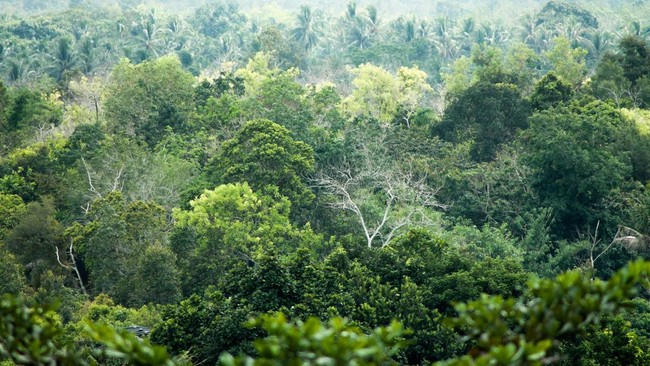
Forests are often associated with timber, carbon storage, or the threat of deforestation. However, for billions of people worldwide, the function of forests is much closer to daily life.
Forests serve as a source of food, medicine, fuel, and various household necessities. Wild fruits, leaves, mushrooms, tubers, fish, and wild game are all part of the diet for communities living within or around forested areas.
A recent report from the Food and Agriculture Organization (FAO) titled ‘Forests for Food: Nourishing People, Sustaining the Planet’ notes that more than 50,000 wild species are utilised by humans for food, energy, materials, and medicine. At least 10,000 species are used directly as food.
In several communities heavily dependent on forests, forest-based foods can meet up to 80% of protein requirements. Furthermore, more than 5 billion people are estimated to rely on forests at various levels to support their livelihoods.
This utilisation does not necessarily mean that forests can be exploited without limits. In sustainable forest management, forest products can still be utilised as long as they do not damage the ecosystem’s ability to recover and regenerate.
From Africa to Asia, Forest Products Reach the Dining Table
The use of forest products varies by region. In Africa, wild fruits, leafy vegetables, mushrooms, and wild game are essential parts of the community’s diet. In the Americas, forests support food security through fruits, fish, and wild meat, particularly in the Amazon region.
Asia possesses the greatest diversity of forest foods, ranging from wild plants and mushrooms to insects and wild game. Meanwhile, in Europe, berries, mushrooms, nuts, and game meat are still widely consumed, while in Oceania, forests provide sago, fruit, tubers, and wild meat for rural and remote populations.
Indonesia Has Fern Curry
Indonesia also shares a long-standing relationship between forests and food. The FAO specifically mentions forest ferns in Indonesia as an example of forest food that persists despite changing consumption patterns.
Ferns have long been a part of Indonesian cuisine. Young shoots are processed into vegetables, stir-fried, boiled, or cooked in coconut milk. In West Sumatra, one of the most well-known preparations is ‘gulai pakis’ (fern curry). Fern shoots are cooked with coconut milk and spices, making it a common dish in Minangkabau cuisine.
The existence of ferns demonstrates that forest foods are not always synonymous with exotic ingredients or foods consumed only by remote communities. On the contrary, products originally from forest areas can integrate into culinary traditions and endure within modern society.
The FAO notes that wild leaves are among the most widely consumed forest products globally. These leaves can serve as a source of protein and micronutrients such as vitamin A, calcium, and iron.
Wild Meat: A Two-Sided Protein Source
In addition to plants, forests are also a source of animal protein. The FAO notes that communities living near forested areas consume various types of wildlife, fish, birds, and insects. In at least 60 countries, forest-based foods are estimated to contribute at least 20% of animal protein in rural diets. This role is even more significant in parts of Africa.
The consumption of wild meat in the Congo Basin is estimated to reach approximately 5 million tonnes per year. In several African communities, wild meat can meet up to 80% of daily protein requirements.
However, the consumption of wild meat also presents sustainability challenges. The FAO notes that hunting in many Asian forest regions has reached unsustainable levels over the last 30-40 years. Pressure is increasing due to growing demand from urban populations, easier access to forested areas, and advancements in hunting technology.
This means that the role of wild meat as a food source must be distinguished between utilisation for local community needs and excessive exploitation for commercial markets. If the harvesting of wildlife exceeds the population’s ability to recover, the very food source that supports these communities could disappear.
From Sago to Wild Boar, Forests Sustain Papua
In Papua, the connection between the community and the forest is clearly visible in daily dietary patterns. Sago is a vital staple, and in several parts of Papua, it is processed into ‘papeda’.
Forests also provide protein sources. The FAO notes that wild boar meat is a valuable food in many regions of Indonesian Papua and is frequently shared during feasts or communal activities. Freshwater fish and other aquatic animals are also essential parts of the diet for communities in lowland forest areas.
However, changes in consumption patterns and lifestyles are beginning to shift this relationship. The FAO notes that elderly populations in Papua Province are becoming concerned about the declining knowledge of traditional wild foods among the younger generation.
Forests are Permissible for Use, Provided They Remain Sustainable
Globally, sustainable forest management emphasises that forests can continue to be utilised to meet economic and social needs, provided their ecological functions are maintained. The FAO states that sustainable management must preserve the economic, social, and environmental values of forests for both present and future generations.
The United Nations framework also assesses forest sustainability through seven elements, ranging from forest area and biodiversity to ecosystem health, production and protection functions, socio-economic benefits, and the quality of governance.
Similar principles are used in global certification standards such as the PEFC. These standards regulate the requirements for forest management to ensure that the use of forest products and services continues without compromising the sustainability of their resources.
Source: jawawa.id (https://jawawa.id/newsitem/10-000-forest-species-consumed-by-billions-from-fern-curry-to-wild-boar-1789719905)
Originally published by CNBC Indonesia (https://www.cnbcindonesia.com/research/20260917160115-128-768791/10000-isi-hutan-dimakan-miliaran-manusia-gulai-pakis--babi-liar), translated from Indonesian