
1 Muharram a moment of reflection to strengthen commitment to building Indonesia
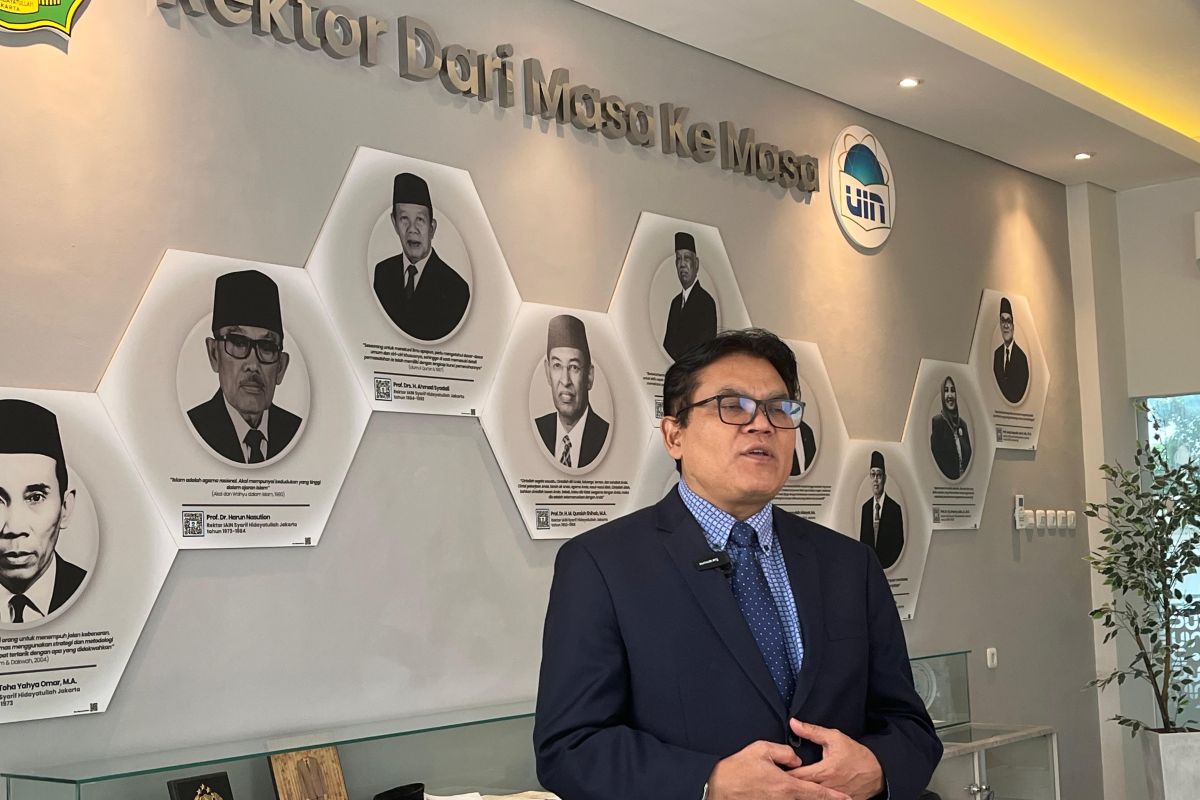
Rector of UIN Syarif Hidayatullah Jakarta, Asep Saepudin Jahar, stated that the momentum of 1 Muharram or the Islamic New Year 1448 Hijriah serves as a shared space for reflection to continuously strengthen the commitment to building an Indonesia with integrity, justice, and progress. “The momentum of the Islamic New Year 1448 Hijriah should not be interpreted merely as a change in the religious calendar. More than that, the Islamic new year needs to become a shared space for reflection,” Asep said in Jakarta on Tuesday. According to him, the migration of Prophet Muhammad from Mecca to Medina is an important milestone in the history of civilisation, signifying not just a physical relocation but also a social transformation that gave birth to a just, inclusive, productive society oriented towards the common good. Asep assessed that Indonesia is currently entering a new era with various global dynamics, ranging from the development of artificial intelligence, climate change, global economic uncertainty, geopolitical conflicts, to technological disruptions affecting nearly all aspects of public life. Therefore, he called on all elements of the nation to make this spirit of hijrah an inspiration for strengthening integrity, advancing public governance, and improving the quality of human resources through education. On the aspect of public governance, Asep emphasised that the nation’s progress is determined by the quality of integrity across various sectors. “Indonesia needs this momentum of hijrah to continuously improve governance that is transparent, professional, and oriented towards public service,” he said. In the economic field, Asep appreciated the various development efforts and industrial downstreaming undertaken by the government to increase national economic added value. He stressed that the current economic growth serves as a foundation for ensuring that welfare benefits remain sustainable for all levels of society. Meanwhile, in the education sector, Asep assessed that Indonesia’s future depends heavily on the quality of human resources capable of adapting to developments in digital technology, artificial intelligence, and automation. He asserted that higher education institutions must become centres for the development of science, research, innovation, and character building. “Education must not only produce graduates who are academically excellent but also possess integrity, ethics, and social responsibility,” he said. Asep added that the nation’s challenges cannot be solved by a single party alone. The government, higher education institutions, the business world, religious figures, the media, and civil society need to move together to build a culture of integrity, strengthen innovation, and expand access to welfare and quality education. He expressed hope that the Islamic New Year 1448 Hijriah would become a momentum to strengthen the spirit of change towards a more advanced Indonesia. According to him, if all elements of the nation can perform their roles optimally, the aspiration towards a Golden Indonesia 2045 can be realised together. “The true meaning of hijrah is the courage to change for the better. That is the spirit that needs to be continuously kept alive in the life of the nation and state,” he said.