
1.8 Million Vehicles Leave Jabodetabek, Majority Heading to Trans Java
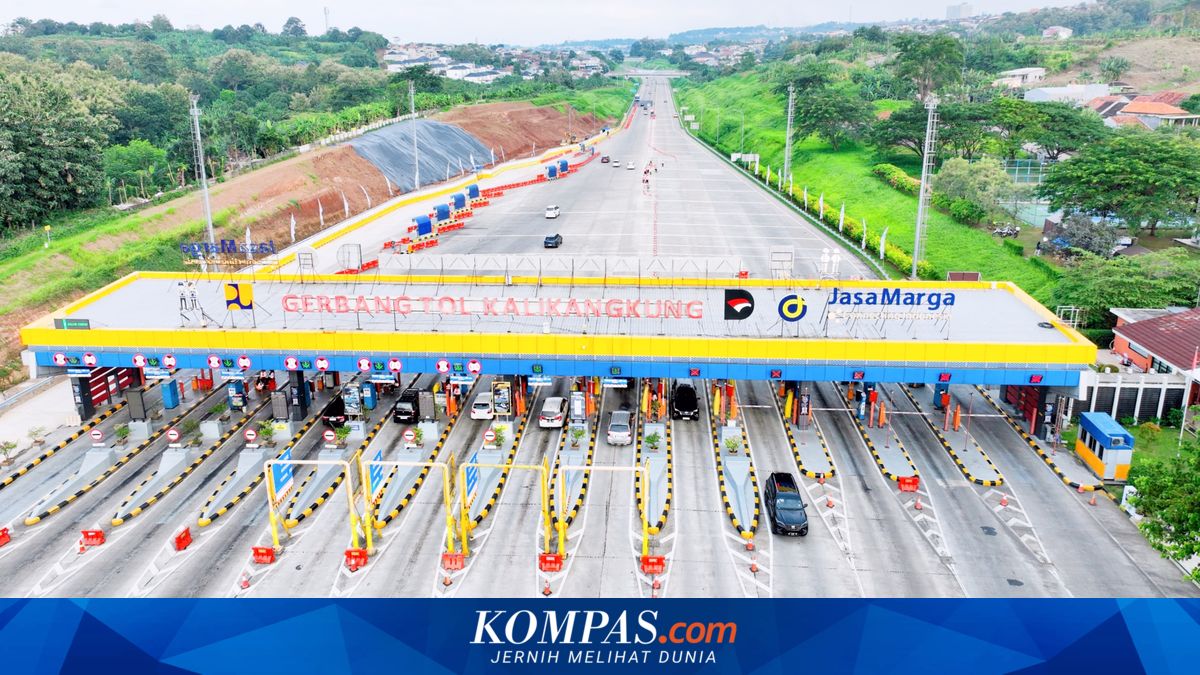
PT Jasa Marga (Persero) Tbk’s President Director, Rivan A. Purwantono, stated that the traffic volume leaving the Jabodetabek area from H-10 to H-1 of the Eid al-Fitr 1447 Hijriah holiday, or during the period of 11-20 March 2026, reached 1,810,134 vehicles.
This figure is the cumulative traffic flow from four main toll gates: Cikampek Utama GT (towards Trans Java), Kalihurip Utama GT (towards Bandung), Cikupa GT (towards Merak), and Ciawi GT (towards Puncak).
Rivan said that the 1.8 million vehicles leaving Jabodetabek constitute 51.3% of the total projection of 3.5 million vehicles expected to exit Jabodetabek during the period of 11-31 March 2026.
The vehicles leaving Jabodetabek headed in three directions, with the majority—989,628 vehicles (54.7%)—going east (Trans Java and Bandung), 465,840 vehicles (25.7%) heading west (Merak), and 354,666 vehicles (19.6%) south (Puncak).
The detailed distribution of traffic flow is as follows:
Traffic leaving Jabodetabek towards Trans Java via Cikampek Utama GT on the Jakarta-Cikampek Toll Road totalled 661,258 vehicles. This represents an increase of 131.9% from normal traffic.
Traffic leaving Jabodetabek towards Bandung via Kalihurip Utama GT on the Cipularang Toll Road totalled 328,370 vehicles. This is an increase of 3.8% from normal traffic.
Traffic leaving Jabodetabek towards Merak via Cikupa GT on the Tangerang-Merak Toll Road amounted to 465,840 vehicles, which is 4.2% lower than normal traffic.
Meanwhile, the number of vehicles leaving Jabodetabek towards Puncak via Ciawi GT on the Jagorawi Toll Road was 354,666 vehicles, an increase of 0.1% from normal traffic.
Jasa Marga recorded that on H-1 of the Eid al-Fitr holiday, or Friday, 20 March 2026, the traffic volume leaving the Jabodetabek area through the four main toll gates reached 117,606 vehicles, 27.0% lower than the normal traffic of 161,064 vehicles.
Therefore, Jasa Marga has strengthened services on several main toll road sections by optimising toll gate operations, preparing toll road service fleets, conducting situational traffic management, and ensuring the readiness of field personnel 24 hours a day.
“Ahead of the return flow period, we ask for the cooperation of road users to plan their journeys even better by avoiding the predicted peak return flow time on Tuesday, 24 March 2026,” Rivan concluded.