
1,680 Mangroves Planted to Protect Coastline from Abrasion
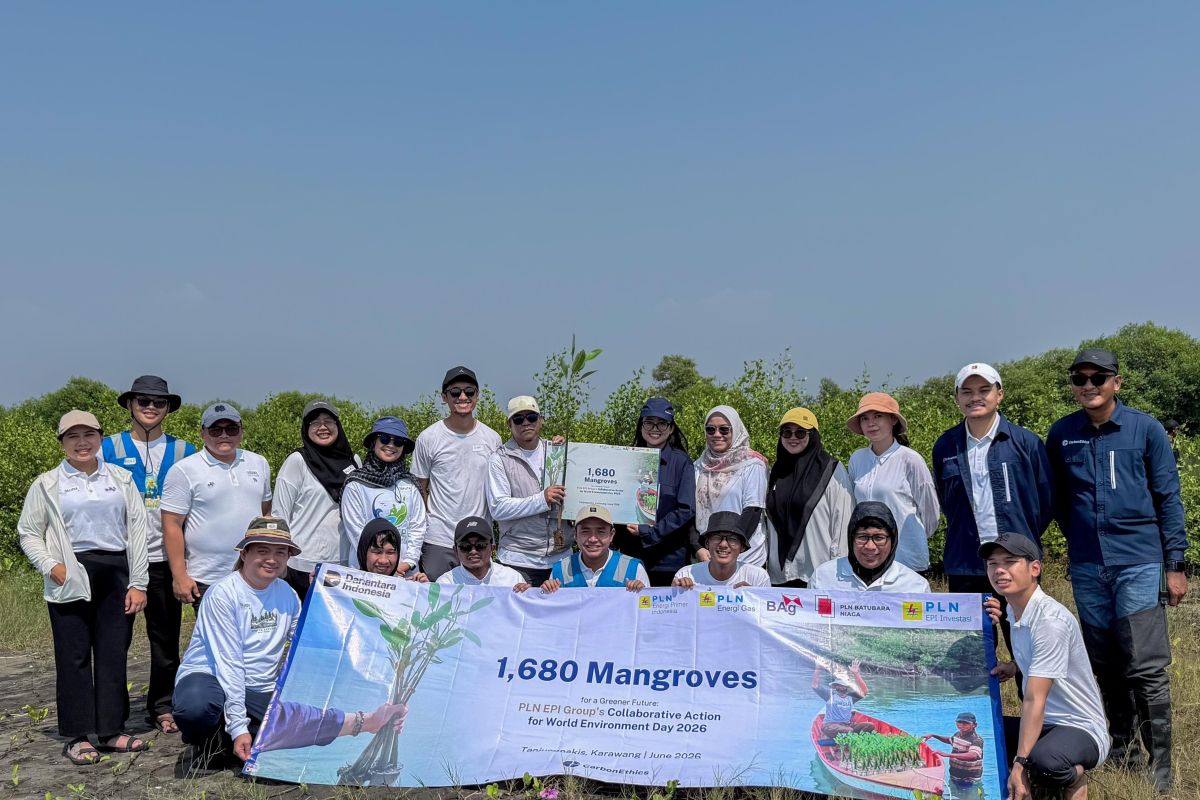
Efforts to strengthen coastal resilience while supporting climate change mitigation continue through mangrove planting as a nature-based solution. Besides functioning to protect shorelines from abrasion, mangroves also play an important role in absorbing carbon and maintaining the sustainability of coastal ecosystems. PT PLN Energi Primer Indonesia (PLN EPI), together with its subsidiary, planted 1,680 mangrove seedlings at Tanjung Pakis Beach, Pakisjaya District, Bekasi Regency, West Java, in commemoration of World Environment Day 2026.
PLN EPI’s Vice President of Occupational Health, Safety, Security and Environment (K3KL), Muhammad Aminuddin, said the company continues to strengthen various sustainability initiatives that focus not only on emission reduction but also on protecting communities vulnerable to the impacts of climate change. “We continue to promote various decarbonisation initiatives and nature-based solutions as part of the company’s sustainability strategy,” he said.
According to Aminuddin, mangrove planting in coastal areas is a concrete step to strengthen environmental resilience while restoring the ecological functions of the shoreline. “Mangrove planting at Tanjung Pakis is a concrete step by PLN EPI to strengthen coastal resilience, restore ecosystems, and contribute to carbon absorption. Through this action, we want to ensure that environmental benefits can be directly felt by the community,” he said.
Tanjung Pakis Beach was chosen because of its strategic role as a coastal buffer zone facing challenges of abrasion and pressure on mangrove ecosystems. The presence of mangroves is considered essential as a natural barrier capable of reducing the impact of sea waves, abrasion, and rising sea levels. In addition to their coastal protection function, mangroves are also part of the blue carbon ecosystem, which is effective in absorbing and storing large amounts of carbon. This ecosystem also helps maintain water quality, provides habitat for various marine biota, and supports the sustainability of coastal community livelihoods. The programme was implemented through collaboration with CarbonEthics, which supports the planting, maintenance, and ongoing monitoring of mangrove growth.
Aminuddin emphasised that the programme does not stop at planting activities alone but will continue with periodic maintenance and evaluation to ensure the survival rate of the plants and the environmental benefits produced. “As part of a measurable sustainability approach, this programme does not stop at planting activities.” He added that this approach is expected to create a long-term impact for coastal ecosystem restoration while increasing the resilience of surrounding communities to the impacts of climate change. “Through this simple yet sustainable step, PLN EPI hopes to contribute to creating a more resilient, low-carbon, and sustainable environment for future generations,” Aminuddin said.