
1.68 Million Train Passengers Use Face Recognition Boarding Gates in First Half of 2026
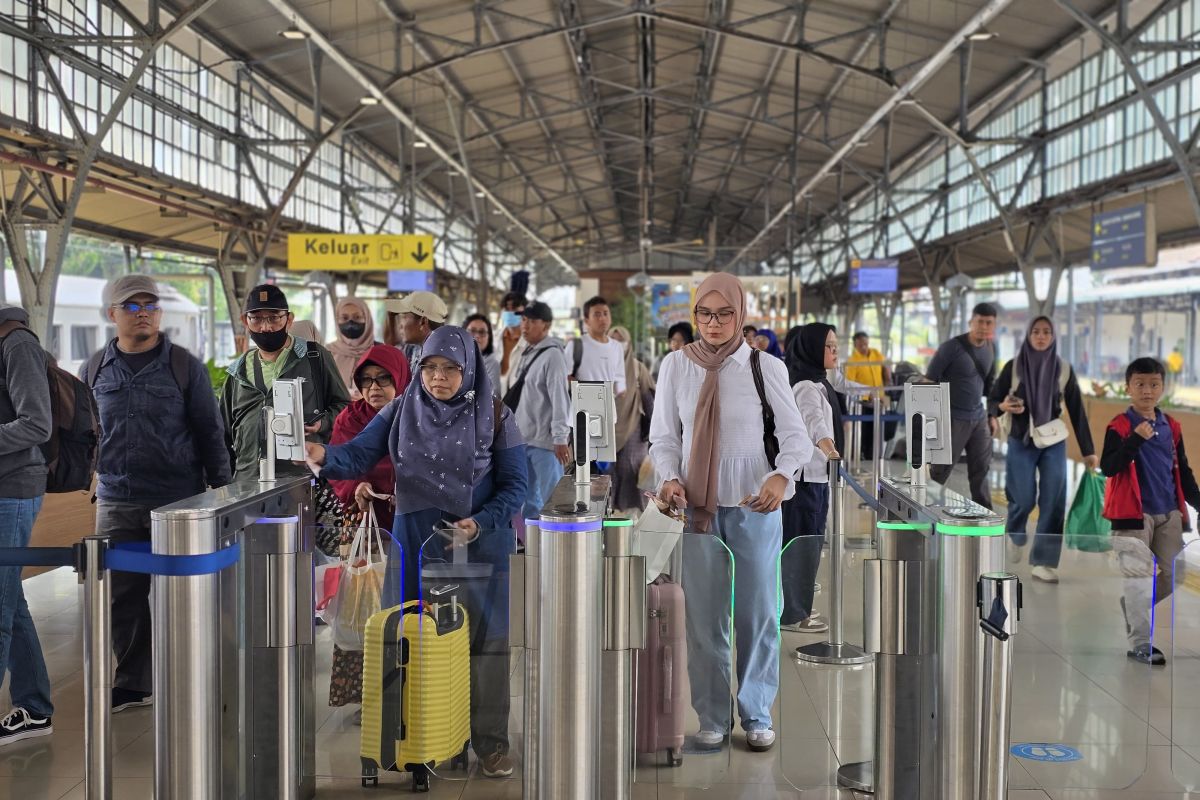
A total of 1,689,524 long-distance train passengers used the face recognition boarding gate service in the PT Kereta Api Indonesia (Persero) Operational Area 1 Jakarta during the first half of 2026. Manager of Public Relations for KAI Daop 1 Jakarta, Franoto Wibowo, stated that this figure indicates a growing number of customers are taking advantage of a boarding process that is practical, fast, and still prioritises security. The Face Recognition Boarding Gate is a KAI innovation designed to simplify ticket checks using facial recognition technology. Through this service, passengers only need to scan their faces at the departure gate scanner, without having to show a physical ticket or identity card to officers. According to Franoto, the use of this technology speeds up the inspection process while providing convenience for customers entering the departure area. Beyond offering ease and accelerating the boarding process, the use of face recognition is also part of an effort to promote more environmentally friendly services. By not printing tickets, customers play a role in reducing paper usage and potential waste generation, Franoto said. Pasar Senen Station recorded 526,244 passengers, while Bekasi Station recorded 158,934 passengers. Currently, face recognition boarding gate facilities are available with four units in the South Hall of Gambir Station, six units at Pasar Senen Station located in the platform 1 and platforms 3-4 areas, and three units at Bekasi Station. Franoto stressed that KAI implements a data protection system in the use of this service. Customer data is used for identity verification during boarding and is managed in accordance with applicable personal data protection regulations. KAI ensures that customer data is not used outside the needs of service and travel verification. The security and confidentiality of data are an important part of the implementation of face recognition technology, Franoto affirmed. Prospective passengers can register through the Access by KAI application by selecting the account menu, then choosing face recognition registration. They must then enter the requested data according to their passenger identity, take a facial photo through the application, and ensure the registration process is successful before using the boarding facility. In addition to the Access by KAI application, registration can also be done through officers at the face recognition registration service at Gambir Station, Pasar Senen Station, and Bekasi Station. We invite customers to utilise the face recognition service to make the boarding process more streamlined. KAI continues to evaluate and improve the quality of this facility as part of the transformation of service to the public, Franoto concluded.