
1,640 UMK Students Deployed for Uninhabitable Housing Verification
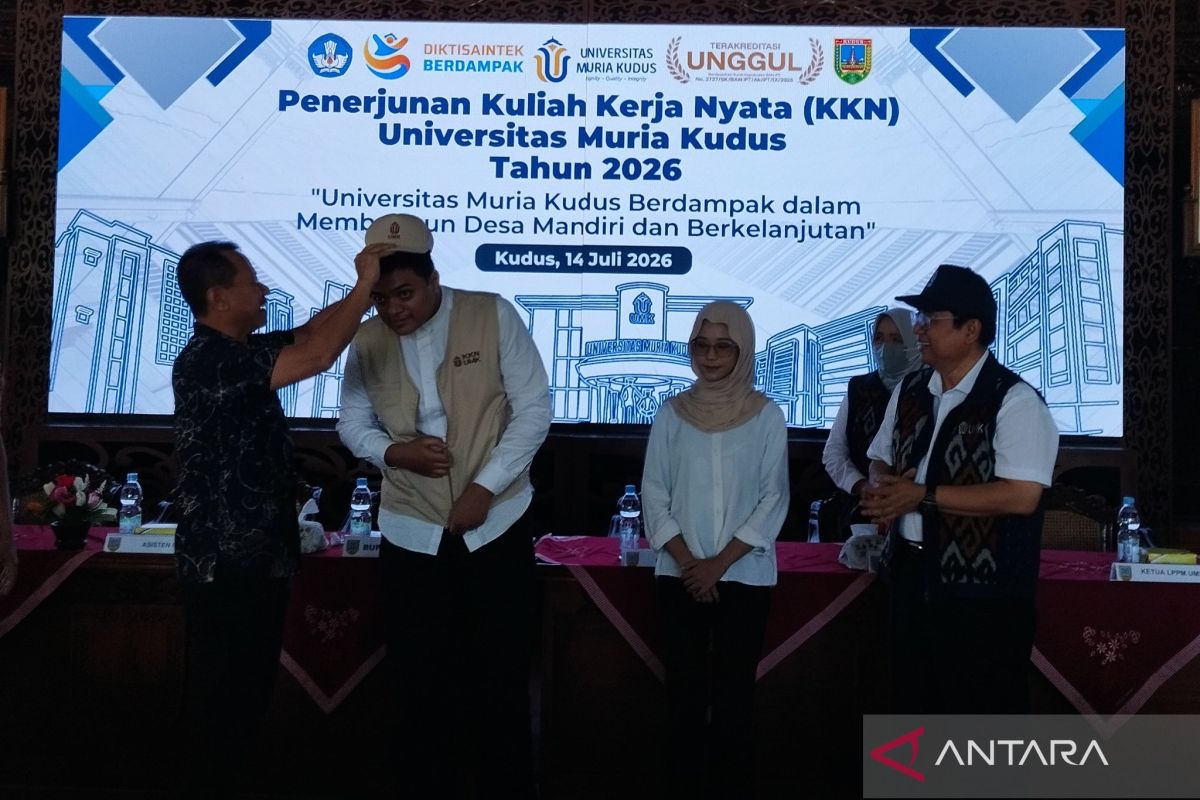
A total of 1,640 university students participating in a community service programme (KKN) in the districts of Kudus and Demak, Central Java, are being tasked with verifying and validating data on uninhabitable houses in their assigned areas. UMK Rector Darsono stated during the KKN deployment ceremony at the Kudus Regency Pendopo on Tuesday that this marks the second year of the collaboration with the Central Java Provincial Housing and Settlement Office. He noted that the previous year’s programme received the highest appreciation from the provincial government, achieving a performance index score of 140 percent. Darsono expressed hope that this recognition would motivate this year’s students to outperform their predecessors. The students will be deployed to 132 villages and sub-districts in Kudus Regency and nine villages in Karanganyar Sub-district, Demak Regency. He advised village and sub-district heads to guide the students in gaining practical life experience, complementing the hard skills they have already acquired in their respective fields. He also urged them to uphold the good name of Universitas Muria Kudus and to prioritise teamwork over individual ego. Kudus Regent Sam’ani Intakoris expressed hope that the KKN participants would identify village-level problems, including waste management, food security, village governance, and extreme poverty. He noted that the students are also involved in independently collecting data on uninhabitable houses (RTLH), so that the information can be synchronised with existing data held by village officials. The verified and validated data will subsequently be processed by the Regional Development Planning, Research and Innovation Agency (Bapperida) to serve as a basis for proposing home renovation programmes to local and provincial governments, as well as through corporate social responsibility (CSR) schemes. He encouraged the students to explore local potential, both in business and culture, and instructed all regional apparatus organisations to assist students who encounter business actors facing difficulties with funding or licensing.