
1,000 Teachers in Remote Mappi Receive Training to Boost South Papua's Human Resources
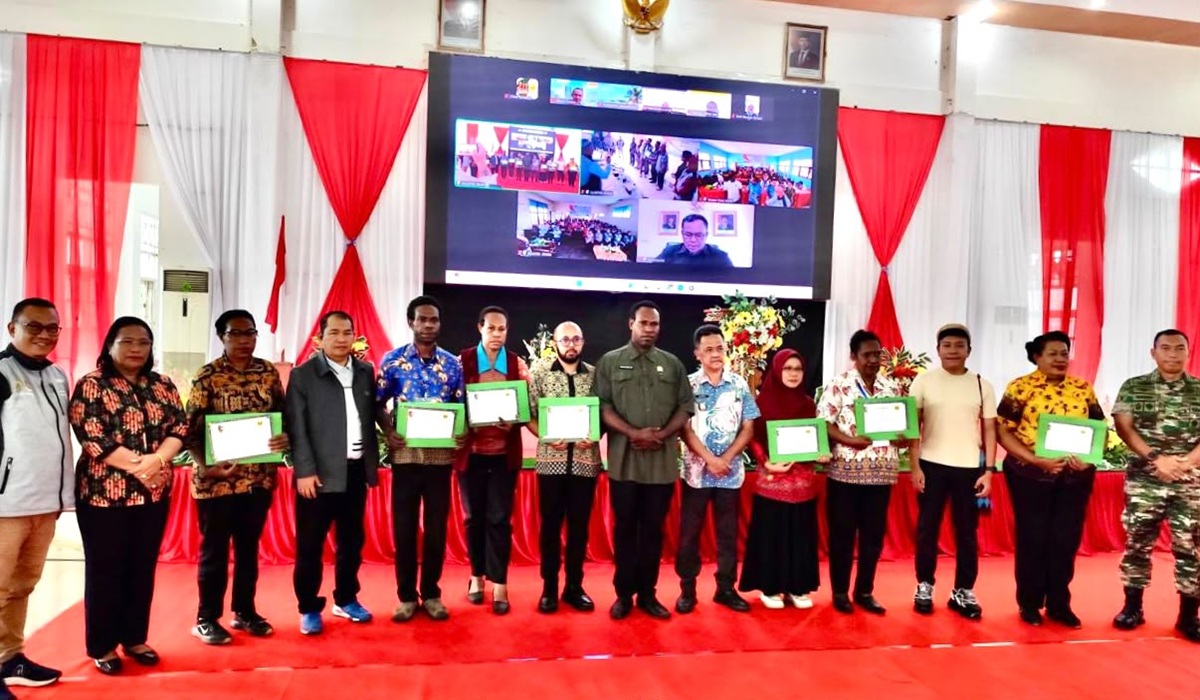
Achieving equitable education quality across Indonesia is impossible without an even distribution of quality educators. Upholding this spirit, 46 professors and lecturers from Jakarta State University (UNJ), together with Dr. (Cand.) Billy Mambrasar, S.T., B.Sc., Ed.M., MBA., went directly into the interior of Mappi Regency, South Papua. The presence of these academics aimed to provide Capacity and Competency Strengthening Training for around 1,000 school principals, teachers, and school supervisors. The programme, which took place from 6 to 10 July 2026, is the fruit of a strategic collaboration between the Mappi Regency Government and UNJ in an effort to strengthen the quality of human resources through education. The training was not centralised in one location but used a cluster system to reach educators in remote areas. Training locations were spread across four main districts: Kepi, Edera, Assue, and Citak Mitak. The struggle for the facilitator team to reach the locations was not easy. They had to travel for hours by land and river, crossing swamps and muddy terrain. In Citak Mitak District, for example, the journey took up to six hours, while the team assigned to Assue District had to travel approximately 220 kilometres via a route heavily dependent on weather conditions. Over five days, participants were equipped with various strategic competencies, ranging from school principal leadership and student-centred learning strategies to the use of digital technology. The training was designed to be participatory through case studies and hands-on practice to ensure relevance to the characteristics of the South Papua region. Billy Mambrasar stressed that development in Papua must not focus solely on physical infrastructure. He stated that the greatest investment must be directed towards increasing the capacity of teachers as the main actors in shaping the future generation. This step is crucial considering the human development conditions in the region. According to data from the Central Statistics Agency (BPS), the Human Development Index (IPM) for South Papua Province is currently around 61, lagging significantly behind the national average, which has exceeded 75. The presence of education experts from UNJ in the remote areas of Mappi is seen as tangible proof of collaboration capable of delivering educational equity. Mambrasar added that improving teacher competency has an extraordinary multiplier effect. Through this programme, the Mappi Regency Government and UNJ hope to create a professional and adaptive education ecosystem, so that the quality of education is no longer determined by geographical boundaries.