
1,000 Dead: Is a Massive Earthquake Truly Imminent in Japan?
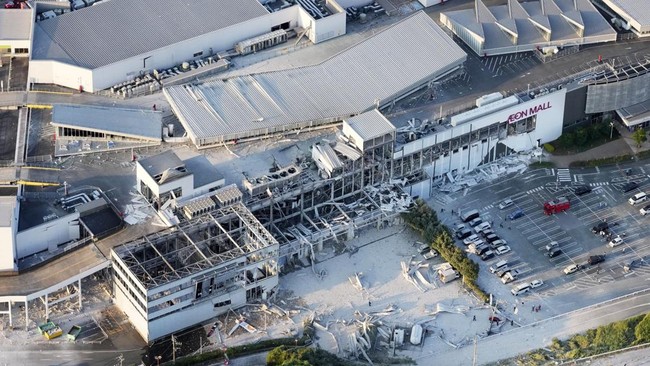
A magnitude 7.1 earthquake struck Kumamoto Prefecture on Tuesday (28/07/2026), raising long-standing questions about whether Japan is approaching a predicted massive earthquake. While the US Geological Survey (USGS) recorded a magnitude of 6.8, the Japan Meteorological Agency (JMA) reported a magnitude of 7.1.
The death toll reached at least 36 people as of Saturday (01/08/202do6). Victims were found in the Aeon Mall Kumamoto following explosions and structural damage, as well as at a paper mill in Yatsushiro after a chimney collapsed. Numerous houses and buildings also crumbled.
The earthquake occurred at a depth of approximately 10 kilometres, resulting in intense surface shaking. Ongoing aftershocks and temperatures exceeding 35 degrees Celsius have significantly hindered search and rescue operations.
This event has revived public anxiety regarding much larger disasters. For years, Japan has prepared for a potential megathrust earthquake in the Nankai Trough, though the exact timing remains uncertain. Amidst these threats, the line between scientific calculation and prophecy often becomes a subject of debate in Japanese society. In 2025, many travellers cancelled trips to Japan following various paranormal predictions, which the JMA dismissed, stating that science cannot yet precisely predict the time, location, or magnitude of earthquakes.
However, the lack of proven prophecies does not diminish the actual threat. The Japanese government maintains official estimates for the Nankai Trough megathrust earthquake, calculating probabilities based on historical data and tectonic pressure rather than specific dates. In September 2025, research panels updated the probability of a major Nankai Trough earthquake occurring within the next 30 years to between 60% and 90%. In a worst-case scenario, the government estimates such an event could claim nearly 300,000 lives and cause economic losses of approximately 270.3 trillion yen.
Crucially, the Kumamoto earthquake is not considered a direct precursor to the Nankai Trough event. The USGS explained that the recent quake was triggered by strike-slip movement on a shallow fault, a different mechanism from the megathrust process where one plate slides beneath another.
Over the last decade, Japan has experienced frequent powerful earthquakes, resulting in over 1,100 deaths. JMA data shows 27 earthquakes with an intensity of at least 6- occurred between early 2016 and July 2026. These fatalities include both direct casualties and those who succumbed to secondary conditions such as hypothermia, landslides, or poor conditions in evacuation centres. Notable examples include the 2018 Hokkaido earthquake and the 2024 Noto earthquake. Japan’s position at the meeting point of four tectonic plates within the Pacific Ring of Fire ensures it remains one of the most seismically active regions in the world.