
Slow Revision of Election Law Risks 'Patchwork' Improvements for 2029 Elections
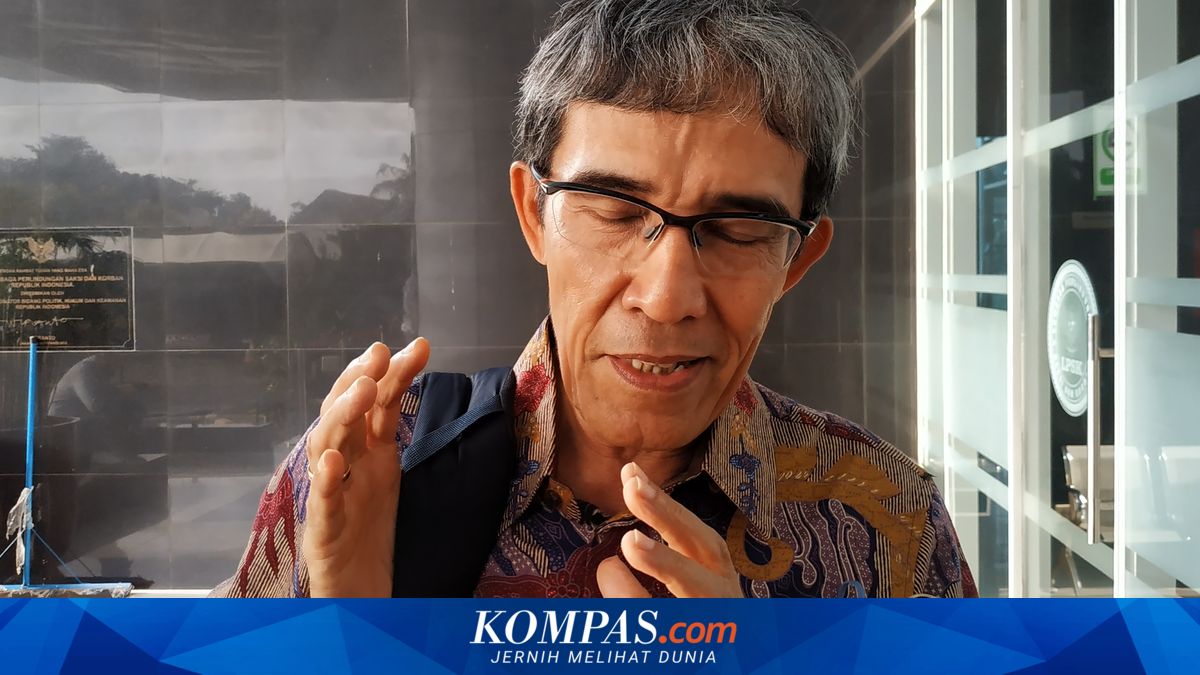
JAKARTA, KOMPAS.com - The discussion on revising the Election Law (UU Pemilu) that remains stalled in the DPR has drawn concerns from various quarters. If not resolved promptly, Indonesia is deemed at risk of being trapped in “patchwork” improvements to the electoral system for the 2029 elections. Executive Director of the Network for Democracy and Electoral Integrity (NETGRIT) Hadar Nafis Gumay warned that the slowness of the discussion will directly impact the quality of the resulting regulations. “If our DPR takes the position of not rushing, later, end of the year, next year it’s done, well, that’s it. So, we will have a patchwork law and ultimately the quality of our elections can be imagined not to move up as it should be the right of us all,” Hadar said during an online Public Forum on Monday (4/5/2026). “If this is not discussed soon, then we will not have a law or elections with better quality,” he stated. Urging acceleration for legal certainty The Civil Society Coalition for the Codification of the Election Law also urged the DPR to promptly complete the revision of the Election Law within a measured timeframe. Researcher from the Association for Elections and Democracy (Perludem) Kahfi Adlan emphasised that acceleration is needed to ensure legal certainty before the selection stages for election organisers begin. “We from the Civil Society Coalition for the Codification of the Election Law urge the DPR to complete the discussion on revising the Election Law within a measured timeframe by making it a national legislative priority to ensure legal certainty before the election organiser selection stages begin,” Kahfi said. “And to ensure that regulatory changes are not based solely on short-term electoral interests,” Kahfi added. In addition, the coalition encourages the discussion process to be conducted transparently, accountably, and with meaningful public participation. “Guarantee meaningful public participation in every stage of the discussion,” Kahfi continued. The coalition assesses that delaying the discussion without adequate reasons could potentially create legal uncertainty and limit opportunities for substantial improvements. “The coalition asserts that using Law Number 7 of 2017 on Elections without revision will not result in significant changes in future election quality. Even the DPR is deemed to have bypassed the constitution by ignoring the Constitutional Court’s ruling which mandates regulatory adjustments,” Kahfi stressed. Constitutional Law Expert Ida Budhiati views the revision of the Election Law as an important prerequisite for producing competent organisers. “If the current regulations have not undergone changes, it will be difficult for the selection team to obtain profiles that match the institutional needs as well as the electoral law aspects,” Ida said. She emphasised that legal certainty is the primary requirement for democratic elections. Without regulatory updates, the selection process may not be able to net candidates according to needs.