
NASA Reveals Data on Forest and Land Fires in Papua
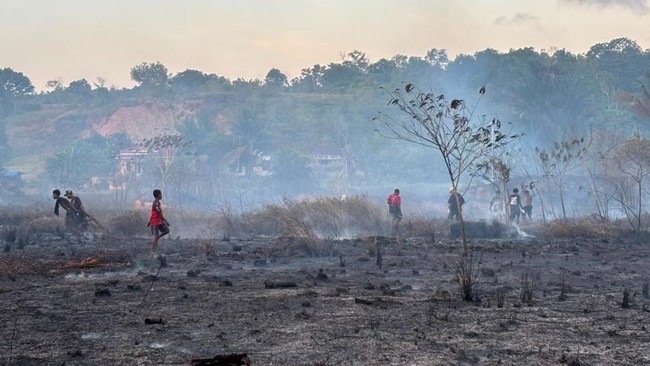
Jakarta, CNBC Indonesia — Forest and land fires have occurred not only in Kalimantan and Sumatra, but also in Papua, where they have had a severe impact.
NASA recorded that El Niño-related drought caused land to burn and smoke to blanket much of the region for weeks between September and October 2026.
The Visible Infrared Imaging Radiometer Suite (VIIRS) aboard the NOAA-20 satellite captured thick smoke rising from the island’s south on 11 October 2026. In recent weeks, pollution levels have surged, flights have been cancelled, schools have closed, and people have been urged to ensure children and older people wear masks.
Robert Field, a research scientist at NASA’s Goddard Institute for Space Studies and Columbia University, explained the impact of the fire smoke. Some smoke is carried upwards into the upper troposphere, while some remains close to the surface, causing air-quality problems.
“This is a terrible situation,” Field said, according to NASA’s official website on Monday (26 October 2026).
Data from the Global Fire Emissions Database (GFED) show a record increase in carbon emissions. By 17 October 2026, 32 megatonnes of carbon had been released in the eastern part of the island, far more than in the previous year.
“Emissions are already far higher than the total emissions in 2015, and this is very likely to be the highest-emissions year on record for Papua New Guinea, even exceeding 1997,” said Guido van der Werf, a fire scientist at Wageningen University & Research.
In Indonesia’s Papua region, more than 35 megatonnes of carbon emissions were released. This is the highest figure since 2015 and 1997, when El Niño and fires also affected the region.
El Niño remains a key cause of ecosystems becoming vulnerable to fire. However, some fires are also started by people to clear land and for hunting.
“We are seeing very high levels of fire activity in Papua New Guinea and eastern Indonesia, particularly Papua and Indonesian Kalimantan, this year compared with Sumatra and other parts of western Indonesia,” said Yang Chen, a research associate at the University of California.
“Papua is emerging as Indonesia’s new deforestation frontier,” Chen added.