
Experts Call for Climate Crisis to Be Declared a Global Health Emergency
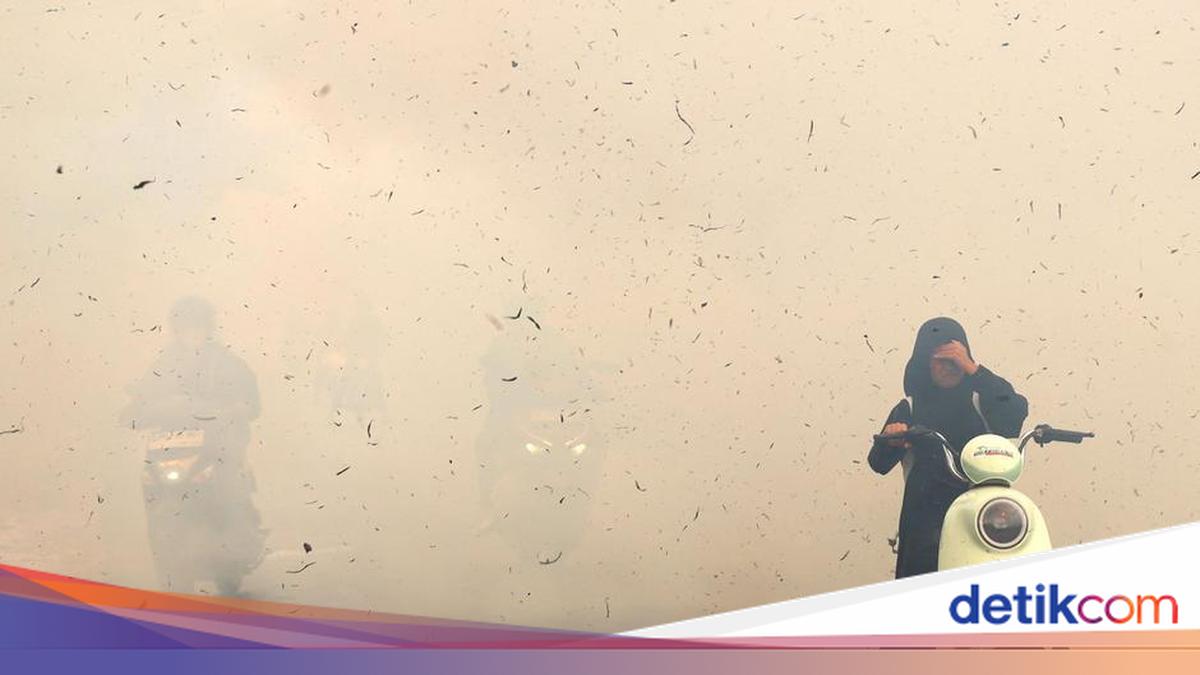
With deaths from extreme heat, drought, wildfires and food insecurity rising worldwide, nearly 150 researchers from more than 30 countries are calling for climate change to be declared a “global health emergency”.
The effects of climate change on health and the economy have increased sharply in the decade since countries signed the Paris Agreement. At the time, the World Health Organization (WHO) praised the landmark climate accord as “the most important public health agreement of the century”.
Climate change, however, contributed to more than half a million deaths linked to extreme heat in 2023 alone, and nearly three million since 2016. The area affected by extreme drought—which threatens food and water supplies and increases the risk of disease—has expanded at a rate more than 700% faster than in the previous decade.
Meanwhile, extreme heat is estimated to have caused US$1.07 trillion in lost potential global income last year. These findings are set out in the annual report by the Lancet Countdown on Health and Climate Change.
“This situation cannot continue,” said Alan Dangour, director of climate and health at Wellcome Trust, one of the world’s largest charitable organisations and a funder of the Lancet report.
“We need to change course and put human health and wellbeing at the heart of the response to climate change. Success should not be measured by emissions targets or degrees Celsius, but by the number of lives saved and improvements in health.”
Climate change’s health impacts are worsening
The latest findings from the Lancet study show how quickly health risks are rising, comparing this decade with the decade before the Paris Agreement was signed.
Extreme heat is the clearest example. Climate change was responsible for 68% of heat-related deaths between 2016 and 2023, up from 55% in the previous decade. Over the same period, the annual rate of increase in deaths caused by climate-driven heat more than doubled.
But deaths are only “the tip of the iceberg”, said Ollie Jay of the University of Sydney’s Heat and Health Research Centre. “The only thing is, this iceberg is not melting; it is getting bigger every year.”
Behind the death toll are cases of heatstroke, sleep disruption and worsening chronic health conditions.
Economic losses are also growing. Working in extreme heat makes people more vulnerable to heat exhaustion, illness and injury, which can ultimately lead to lost income and livelihoods.
Extreme heat resulted in the loss of 573 billion potential working hours in 2025, with agricultural workers bearing the greatest burden. Vulnerable economies in Africa and South-east Asia suffered the largest losses, equivalent to 5% of gross domestic product (GDP), compared with 0.5% in more advanced economies.
“The economic impacts fall hardest on vulnerable sectors and communities,” said Marina Romanello, executive director of the Lancet Countdown, based at University College London, at a press conference.
Water-related extremes are also intensifying. Satellite data show that since 2003, around 43% of the world’s land has been continuously drying, while another 37% has become wetter. Overall, more than 80% of the world’s land has shifted towards extremes that threaten crops, food supplies and sanitation.
Drought can deprive communities of access to safe drinking water and increase the risk of infectious diseases. Flooding, meanwhile, can cause drowning and injuries, as well as contaminate water.
Heatwaves and droughts also left nearly 128 million more people facing food insecurity in 2024 than the average for 1981–2010.
“This is not just a gradual deterioration; it is an extremely drastic change,” Romanello said.
What would a global health emergency declaration mean?
To save lives and protect human health, experts are calling for a new instrument under the WHO to help countries share information, coordinate responses, monitor threats and channel funding. The mechanism would be established by the United Nations and its member states.
The closest existing model is a Public Health Emergency of International Concern (PHEIC), which the WHO used during the COVID-19 pandemic and mpox outbreaks.
However, that mechanism is designed for short-term emergencies and is not adequate for addressing complex threats such as climate change, which require sustained global action across multiple sectors.
The world needs a broader approach, “so that we are not constantly responding to one emergency after another”, Romanello said.
“We need to build an integrated, long-term response that strengthens resilience, builds capacity and increases countries’ ability to prevent the next emergency.”
Progress has been made, but it is not enough
Romanello told reporters that “we have more than enough evidence” that such measures can improve health.
“Early-warning systems that use climate information have been shown to reduce the harmful impacts of these extreme weather events,” she said.
The growth of renewable energy has also helped reduce deaths from air pollution caused by fossil fuels in half of the 140 countries studied since 2016. The decline is estimated to have prevented 323,000 deaths a year.
In addition, 56 countries now have national plans to adapt their health services to the effects of climate change, such as heatwaves and disease outbreaks. That is up from just 14 countries in 2015. The report says, however, that progress remains too slow.
Fossil fuels, whose combustion produces both global-warming emissions and other pollutants, still supply more than 80% of the world’s energy needs.
Energy-sector emissions reached a record high in 2024. The world’s 100 largest oil and gas companies are projected to produce 150% more oil and gas in 2040 than would be consistent with limiting global warming to 1.5°C. A year earlier, the figure stood at 138%.
Investment in old technology
Governments around the world continue to fund fossil fuels. Net subsidies to the sector have doubled since 2016, reaching US$6.2 trillion. In 2024, ten countries spent more on these subsidies than on their entire health systems.
Yet as fossil-fuel prices rise and renewable energy becomes cheaper, these polluting technologies are becoming less economically viable, Romanello said.
She likened new investment in fossil fuels to “investing in Blockbuster when Netflix already exists”. The comparison refers to the once-widespread video-rental chain, which failed to adapt to the rise of streaming services.
Meanwhile, funding to help health systems adapt to climate change remains severely limited.
Developing countries estimate that they need around US$3.3 billion a year for such adaptation. The Lancet report’s authors say that figure is likely to be below the actual need.
However, only around a third of that requirement had been pledged in 2024. Cuts to foreign aid, led by the United States and followed by Germany—the country with the second-largest cuts—have widened the funding gap.
“This report is a stark warning that climate change is a health emergency,” said Helen Clark, former prime minister of New Zealand and chair of the Lancet Countdown board.
“What is lacking is not evidence, but the political will to act.”
Source: jawawa.id (https://jawawa.id/newsitem/experts-call-for-climate-crisis-to-be-declared-a-global-health-emergency-1793274835)
Originally published by detikcom (https://news.detik.com/dw/d-8729879/pakar-minta-krisis-iklim-jadi-darurat-kesehatan-global), translated from Indonesian